William Murray Quotes
It is iniquitous, unjust, and most impolitic to persecute for religion's sake. It is against natural religion, revealed religion, and sound policy.
Murray, William (Lord Mansfield). "Speech in the House of Lords, February 4, 1767." The Parliamentary History of England, vol. 16, T.C. Hansard, 1813, p. 316.

In one of the historical ironies of the 12th century, a Christian sect preferred the rule of the Muslims than their Christian brethren—on the grounds of religious tolerance. It illustrates the changes that take place over time. By the 21st century, it was the Christians who were thought of as tolerant and the Muslims as the opposite.


This was the beginning of the inquisition.


Williams was the first theologian who not only advocated religious toleration but argued that Christianity demanded it and the separation of church and state.


Toleration is a relative term. The Muslim Moors made Christians (and Jews) pay a special tax. At times they were forced to wear special clothing so that they could be readily identified. And they could not build churches larger or taller than the smallest mosque in the community. At times, their occupations were restricted but at other times Christians and Jews were appointed to the highest positions like Vizier. The Inquisition, in contrast, forced all Muslims (and Jews) to leave the country without any of their property or money or be tortured and killed—usually by burning at the stake unless of course that they converted to Christianity.


New Ross was under siege by Cromwell and his English Parliamentarian troops. After two days, the town tried to negotiate terms of surrender and one of the main things they asked for was freedom of religion to practice Roman Catholicism. This famous response set the stage for religious bigotry over the next years. Cromwell’s reasons for not allowing Catholicism to be practiced was not only one of religious zeal. At the time, the Roman Catholic Church was a major geopolitical power under a Pope who commonly supported or even dispatched troops for geopolitical and religious ends. The Vatican was particularly resentful of England for separating from the Church and asserting that the King of England was the head of the Church and not the Pope. Therefore Cromwell and many Englishmen had to deal with the reality that every practicing Catholic in the realm was a potential spy, traitor, and/or rebel. This fear of control of countries by the Pope strongly affected America, and was responsible for the defeat of the first Catholic Presidential Candidate, Al Smith. It was also a major factor in the election of John F. Kennedy so he dealt with it head on.
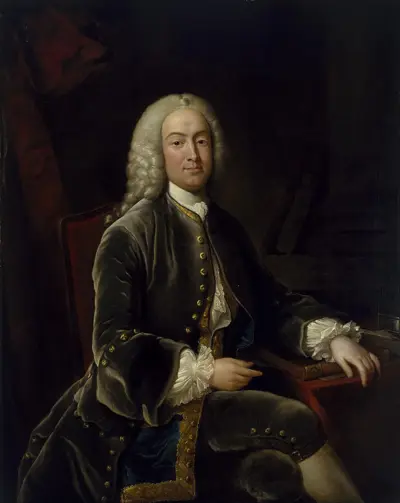
William Murray, 1st Earl of Mansfield, PC, SL was a British barrister, politician and judge noted for his reform of English law. Born to Scottish nobility, he was educated in Perth, Scotland, before moving to London at the age of 13 to take up a place at Westminster School. He was accepted into Christ Church, Oxford, in May 1723, and graduated four years later. Returning to London from Oxford, he was called to the Bar by Lincoln's Inn on 23 November 1730, and quickly gained a reputation as an excellent barrister.
