Fulgencio Batista Quotes
A government needs 100 soldiers for every guerilla it faces.
Fulgencio Batista, 1901-1973, Cuban Dictator, January 1, 1959
Sourced by: Eigen's Political and Historical Quotations


From the beginning, the issue of whether the country should have a standing army or depend on the militia and the citizen soldier has been controversial. There is a , romantic American myth about the Militiamen in Colonial and Revolutionary America—the citizen soldiers who would leave their farms and rise to the military necessity of the day. However, not only were the militia very hard to muster to duty, but most actually didn’t own or have experience with firearms, and the prevailing opinion of knowledgeable military leaders from George Washington on down was that the militia were not very good soldiers. See {613015}, {613016}, {613022}, {613027}, {621987}, {621988}, {613030}, {613033}, & {613056}


During his revolutionary battles in Kaingsi, Mao reduced his theory of guerrilla tactics to a poem:

Mengustu seized power in a coup. However his Marxist Dictatorship was very unpopular and a civil war soon started. The poorly armed opposition used guerrilla warfare insurgency techniques. Since the government was hated by most people there was much support for the guerrilla in the villages and countryside. Mengustu adopted a policy of genocide as described by this chilling quotation. The areas of the country which were sympathetic to the revolutionaries were then systematically starved by the government withholding food. There was a bad agricultural crop but international donors including the United States provided much food aid. However this was withheld by the government from the areas where there was any support for the freedom fighters. Over 1 million Ethiopian citizens were starved to death. This quotation was one of the important documents that proved that there was a systematic government policy to commit genocide—in this case to “drain the sea”. After the revolution was successful, Mengustu was convicted of Crimes Against Humanity but escaped to Zimbabwe where he was given sanctuary by his fellow dictator, Robert Mugabe.
There is a technical issue of whether or not this was genocide in that the exterminated people were not of one race, religion or ethnic group, but the people who were residents of the areas which were giving “aid and comfort” to the freedom fighters.

He had secretly asked the United States to send American troops back to Cuba to help keep law and order as the Cubans could not nor could they govern the polarized society that had been festering under incompetent Spanish rule. President Roosevelt was furious that the Cubans could not govern the country. See {640520}.


Algeria was not a French Colony but an actual province of France where an Algerian had the same citizenship and rights of a Parisian or any other Frenchmen. However the Algerian nationalists combined with the Islamic extremists wanted independence and had started a revolutionary movement primarily using terrorism. Some members of the French Parliament were liberals who thought the Algerians had a right to self-determination and favored a plebiscite; others saw Algeria as a drag on France and were in favor of having it independent. But the majority at that time saw Algeria as a part of France and opposed a change of status. Many in the army however were afraid that the politicians would "sell out" and their sacrifices would have been in vain. This is a common pattern where parts of nations want independence and the military is asked to put down any violence and terrorism. Eventually, the cost in casualties and money became so great that the government did change and allowed Algerian independence—just what the General and many soldiers had feared. In retrospect, the sacrifices were in vain.


Nguyen Ai Quoc was early pseudonym.


This issue of who has the wisdom and competency to determine policy in matters of war has been a constant one in most societies. Even in the Iraq war of the early 21st century, the Congress and the President argued as to what competence the Congress had to determine policy, strategy and tactics.


There is a , romantic American myth about the Militiamen in Colonial and Revolutionary America—the citizen soldiers who would leave their farms and rise to the military necessity of the day. However, not only were the militia very hard to muster to duty, but most actually didn’t own or have experience with firearms, and the prevailing opinion of knowledgeable military leaders from George Washington on down was that the militia were not very good soldiers. See {613015}, {613016}, {613022}, {613027}, {621987}, {621988}, {613030}, {613033}, & {613056}

The Vietnam War was certainly not a victory for the U. S. Some saw it as our first defeat. While it was not ended on Johnson’s watch, he must certainly share that responsibility with Nixon and even JFK as these three all were responsible for our Vietnam failure. Johnson, ended up with what he feared most.

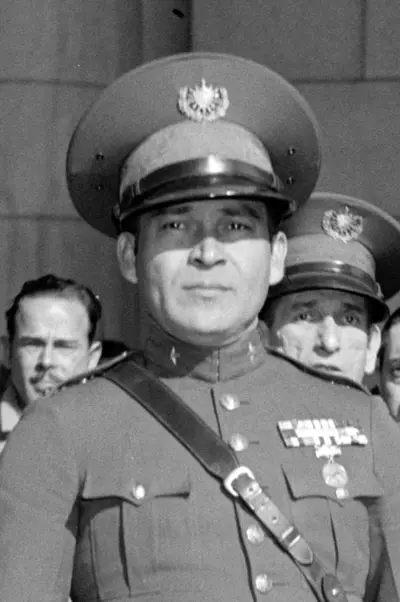
Fulgencio Batista y Zaldívar was a Cuban military officer and politician who served as the elected president of Cuba from 1940 to 1944 and as its U.S.-backed military dictator from 1952 to 1959 before being overthrown during the Cuban Revolution. Batista initially rose to power as part of the 1933 Revolt of the Sergeants, which overthrew the provisional government of Carlos Manuel de Céspedes y Quesada. He then appointed himself chief of the armed forces, with the rank of colonel and effectively controlled the five-member "pentarchy" that functioned as the collective head of state. He maintained this control through a string of puppet presidents until 1940, when he was himself elected President of Cuba on a populist platform. He then instated the 1940 Constitution of Cuba and served until 1944. After finishing his term, Batista moved to Florida, returning to Cuba to run for president in 1952. Facing certain electoral defeat, he led a military coup against President Carlos Prío Socarrás that pre-empted the election.
