Thaddeus Stevens Quotes
A good many people here are disturbed by the practical exhibition of social equality in the arm-in-arm performance of Douglass and Tilton. It does not become radicals like us to particularly object. But it was certainly unfortunate at this time. The old prejudice, now revived, will lose us some votes
Stevens, a man so committed to racial equality that he was buried in a Negro cemetery, but he was a practical politician and realized that racial prejudice was so great that social equality was a much more contentious issue than was slave emancipation.
Thaddeus Stevens, 1792-1868, U. S. Congressman (Whig and Republican, PA), Titular Republican party leader, Quoted in Fawn Bridie, Thaddeus Stevens: Scourge of the South
Sourced by: Eigen's Political and Historical Quotations


This is but one of the quotations of someone who was a major force in perpetuating the old slavery era myth that “Negros” were not only inferior to whites, but they were unable to develop morality or repress their sexual urges. Dr. Howard was generally castigated by his professional colleagues, but he was quite popular with the general public for whom he wrote a number of books and magazine articles.


The Nixon "Southern Strategy" was that if the Republican Party made extensive efforts to appeal to minorities, given the previous decades of support of white supremacy, they would only be successful with a few, whereas if the Party went in the other direction and supported the Whites fighting against the Democratic initiated, racist hated, Civil Rights Act, they would get almost all the racist Southern Democrats, which were most white males and many white females. This racist policy enabled the Republicans to gain control of the Federal Government more often than not whereas before, it was very unusual.


Billy Sunday was the most famous preacher of the day. Unlike the vast majority of white preachers, he not only preached to black audiences but exuded an atmosphere of friendliness and comfort around Blacks that amazed most. Most Black leaders thought Sunday was very good for race relations, but there were some clergy like Grimke who criticized him. Sunday was castigated by many racist whites for preaching to Blacks, but he did not go as far as to condemn or preach against racism and the discrimination of the day and he would not preach to an integrated audience. Grimke, in contrast, preached to an integrated congregation and was one of the few white clergy who did in the South. (Washington DC was then a southern, segregated city.) See {585415} for another critique of Sunday.


Johnson was the first Black man who won the heavyweight championship at a time when racism in America was rampant. Many whites referred to Jeffries as “The Great White Hope” who would take the champion back for the whites. He didn’t and was beaten badly.

As enlightened and progressive that his views on Blacks were, he was amazingly racist when it came to Native Americans. See {588991}.


at the Department of Justice He was commenting on the fact that when he was an official of the Civil Rights Division of the U. S. Justice Department, the Southern members of Congress would not allow any appropriated money to be spend for Civil Rights reform activities. So they would do the Civil Rights work and call it something else so the Southerners who dominated the key Congressional Committees just never knew what was happening in the Department. Ideally, government officials would not try and deceive members of Congress, but the racism of a minority of Congress had been corrupting American life and law since the Constitution was originally ratified. Somoral corruption just brought on another type of moral corruption.
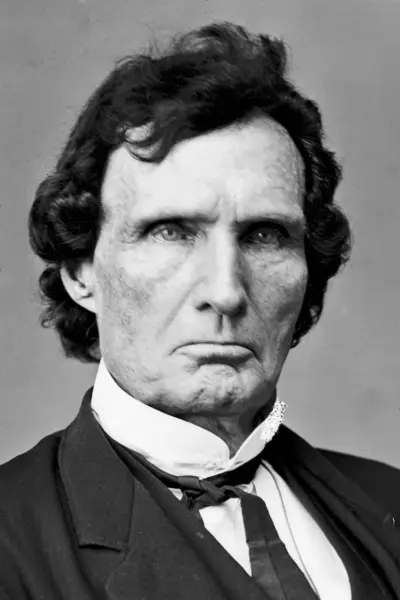
Thaddeus Stevens was a member of the United States House of Representatives from Pennsylvania. He was one of the leaders of the Radical Republican faction of the Republican Party during the 1860s. A fierce opponent of slavery and discrimination against African Americans, Stevens sought to secure their rights during Reconstruction, leading the opposition to U.S. President Andrew Johnson. As chairman of the House Ways and Means Committee during the American Civil War, he played a leading role, focusing his attention on defeating the Confederacy, financing the war with new taxes and borrowing, crushing the power of slave owners, ending slavery, and securing equal rights for the Freedmen.
