John Berger Quotes
A cigarette is a breathing space. It makes a parenthesis. The time of a cigarette is a parenthesis, and if it is shared, you are both in that parenthesis. It's like a proscenium arch for a dialogue.
Berger, John. Here Is Where We Meet. Pantheon Books, 2005.


The President smoked cigars but never in public:


Henry Ford had an absolute phobia about tobacco. Although the terrible carcinogenic effect of smoking was not known at the time, Ford was convinced that cigarettes deteriorated the brain and turned people into criminals. He banned smoking in all Ford plants and offices. This is a good example of doing the right thing for the wrong reason.

The. law was enforced and upheld by the Tennessee Supreme Court (Austin v State) which recognized the health danger of tobacco. Tennessee was an agricultural state where tobacco was grown and the law was repealed as the result of political pressure. But this is the first and only absolute state prohibition on tobacco that has been enacted in the United States.
This quotation not only illustrates Ford’s wide ranging concern about public affairs but illustrates that the addictive properties of cigarettes were known long before the cancer and other disease causing properties of tobacco were understood. Yet the addictive properties were the last deleterious effects of smoking that the tobacco companies would admit to. At the end of the 20th century, the CEO’s of the major tobacco company all lied to Congress in hearings, claiming that cigarettes were not addictive. Ford and millions of people knew better generations ago.

What is extremely ironic is that Heriot and the English thought tobacco was very healthy for the user. Between this error and the addictive properties of tobacco, more people have been killed by tobacco than any other substance on earth. Heriot also discovered the potato, and was the first man to introduce it to England. Prior to that, this staple of the European diet was unknown in Europe.
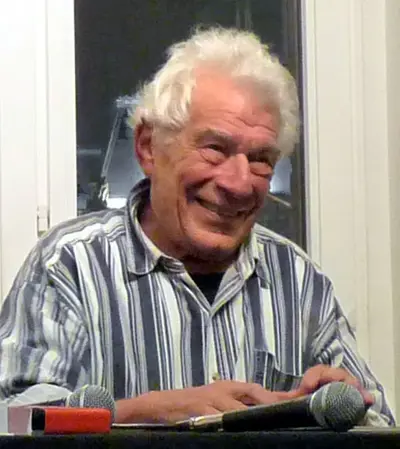
John Peter Berger was an English art critic, novelist, painter and poet. His novel G. won the 1972 Booker Prize, and his essay on art criticism Ways of Seeing, written as an accompaniment to the BBC series of the same name, is often used as a university text. He lived in France for over fifty years.
