Oliver Evans Quotes
A carriage will start from Washington in the morning, the passengers will breakfast at Baltimore, dine at Philadelphia, and sup in New York the same day.... Engines will drive boats 10 or 12 miles an hour, and there will be hundreds of steamers running on the Mississippi, as predicted years ago.
Evans, Oliver. "Steam Engines." Niles' Weekly Register, vol. 3, Supplement, 1813, p. 5.

before there were railroads in the West

to a carriage on wheels At the time Jefferson had never seen a train.


The steamboat was one of the first examples of American preeminence in technology. Like the airplane and the computer to come later, it’s importance was generally not recognized early.

One steam engine, pulling a large plow by cables and manned by 5 or 6 workers could do the work of 20 horse drawn plows each requiring 1 worker. In addition all the workers who were needed to maintain the horses and clean up after them were also no longer required.

Marie Joseph Paul Yves Roch Gilbert du Motier

What Mises says in this quotation is true. What he does not say that by the time the automobile was developed and then the airplane, the Railroad monopoly had impeded and destroyed so many different entities that the governments had cracked down and curtailed much of the ability of the Railroads to exercise monopolist power. If the Railroads had as much power in 1920 as they did in 1870, there probably never would have been a thriving auto industry and the airlines would likely never have succeeded. Mises again exaggerates a basic point that large monopolistic companies and industries often have not been able to stave off new technology and approaches. While true in many cases, the cause is not necessarily fundamental to economics but has sometimes (as with the railroads) been caused by Government regulation and reform. A better example is that the large sail dominated shipping industry was not able to stop the coal fired steam engine ships. Indeed the shipping owners embraced the new technology. The best examples of Mises point occurred after Mises died. For example, Microsoft was not able to prevent Google from dominating many of Microsoft’s positions in the IT world.


He was one of the first to realize that technology was shaping the relations of people and states throughout the world. In 1891 most other people did not appreciate this dynamic including most politicians. However, we might wonder today what period of time he was contemplating when he used the word “rapidly”. Some have concluded that the globalization resulting from technology has been astoundingly fast while others see it as far too slow and it has a long way to go. See the related quotes for others who were early observers of the coming changes. See the Relates Quotes for more of the early observations of this phenomenon.


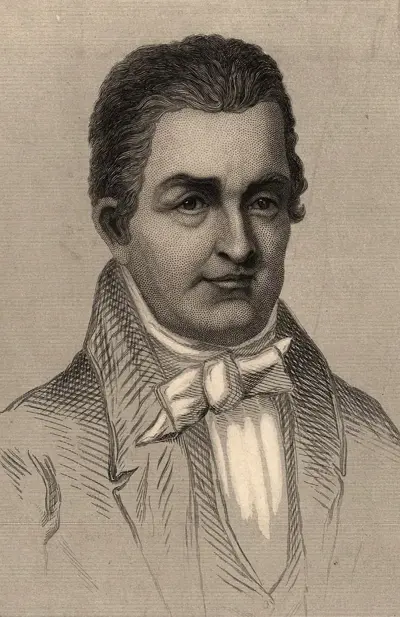
Oliver Evans was an American inventor, engineer and businessman born in rural Delaware and later rooted commercially in Philadelphia. He was one of the first Americans building steam engines and an advocate of high pressure steam (vs. low pressure steam). A pioneer in the fields of automation, materials handling and steam power, Evans was one of the most prolific and influential inventors in the early years of the United States. He left behind a long series of accomplishments, most notably designing and building the first fully automated industrial process, the first high-pressure steam engine, and the first (albeit crude) amphibious vehicle and American automobile.
