Gregory XVI Quotes
A book, small in size, but immense in its perversity
Lamennais, then a priest, was a passionate defender of religious freedom, defending the church from the authority of kings, nobles and other civil authorities. Ironically, this upset the conservative elements of the church who had a symbiotic relationship with the civil powers and Lamennais’ espousal of freedom of worship also threatened their control over how people worshipped. Ironically, Lamennais thought that he was defending the church and was so shocked when he learned that he had been denounced by the Pope that he renounced the church and became a civil publisher and politician.
Gregory XVI, 1765-1846, Roman Catholic Pope, Castigation of Hughes Felicite Robert de Lamennais and his book Paroles d'un croyant, 1832
Sourced by: Eigen's Political and Historical Quotations


This statement in particular was extremely problematical. Sarbi is not just any old Mullah, but the Mufti of Jerusalem, on of the highest ranking Muslims in the World. This statement puts countries like Egypt and Jordan in a very difficult situation as the officials making treaties with the U. S. will be in effect excommunicated.


Even in free America, Allen had a very difficult time getting this work printed because it was so controversial culturally and religiously. However, there was a large population of Unitarians in America at the time and Allen’s view was not that unusual. Some of the founding fathers like Adams and Jeffersion were deists who not only did not believe in the trinity but questioned the divinity of Christ.
Olivi was a brilliant scholar who ran afoul of the religious authorities on several occasions. He was accused of being a heretic for his writings, but was exonerated after intensive trials and debates. In this quotation, he attributed the religious error of Jews and others, not to the anti-Christ, human venality, or even fault of character, but from a difference in human perspective. He was a pioneering original thinker, who while not well appreciated in his lifetime, had a significant cult following including several cardinals of The Church that arose after his death. However, other conservative forces then decided that he was a heretic after all. They burned his writings and destroyed his tomb. Today, there is a street in France named for him.
He was officially hanged for his offence of blasphemy. See {619712}. His execution, which raised considerable concern, was the last execution for blasphemy in Britain.

Luther’s attitude toward the Catholic mass was the main reason the Protestant churches abolished the mass.
Whoever teaches differently from what I have taught, … condemns God and must remain a child of hell.
Humility and doubt were not characteristics of Martin Luther.

Ingersoll was considered to be the greatest orator and political thinker of his day, but his overt atheistic views curtailed his elected political career.


While Aquinas brought much wisdom and good to the Church, this statement and others laid a foundation for murdering non-believers and organizing the Inquisition.


The Inquisition had tortured De Molay and his fellow Templars forcing them to confess to blasphemy, homosexuality and other capital crimes. Finally De Molay was sentenced to be burned at the stake. At the last moment he confessed to having lied under torture.


He was being pressured to recant some of his astronomical findings and demonstrations—especially the statement that the Earth revolved around the sun. (The church doctrine had it the other way around.) Here he seeks sympathy with his plight.

Hamilton had studied with Martin Luther at Wittenberg and returned to Scotland where he converted many from the Catholic Church. He was offered a chance to recant and spare his life but he refused. He became the first Protestant Martyr in Scotland and his death brought many new converts.


Samuel Langhorne Clemens, 1835-1910


See {639434}, {639436}, and {639437} for the triggers to this report.
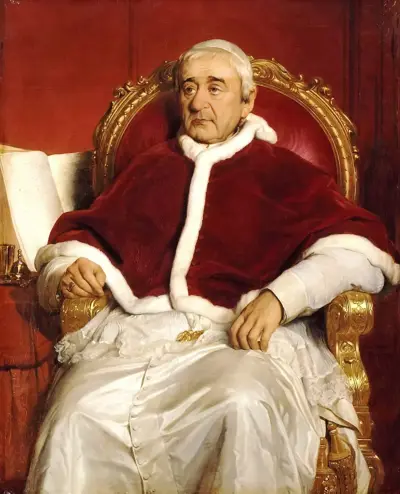
Pope Gregory XVI was head of the Catholic Church and ruler of the Papal States from 2 February 1831 to his death in 1846. He had adopted the name Mauro upon entering the religious order of the Camaldolese.
