Dennis E. Eckart Quotes
A 30 second negative ad can matter more to a candidate's career than a lifetime voting record.
Dennis E. Eckart, U. S. Congressman (Democrat, OH), Quoted in George Will, "Six Terms and Out," The Washington Post, November 14, 1991
Sourced by: Eigen's Political and Historical Quotations

Romney and his surrogates had more than usual difficulty with getting their facts right. Fact checking organizations would call them on this and in April of 2012, Romney ran a TV ad that was grossly wrong and misleading. When asked about the expose of the falsehood of the ad, Newhouse made this classic response. The reason this is an important quotation is that the statement drew much more critical attention than the false had or its classification as untrue did. Even President Obama made fun of it in his campaign speeches. See Martin Amis {631017} for a serious critique of the meaning of the quotation.


Sinclair was a writer who had written about some of the worst scandals in American politics, leaned toward socialized democracy, and decided to run as a reform candidate in California where he lived. He won the Democratic primary easily even though he had no money, political experience, or backing. He terrified the Republicans who ran one of the dirtiest campaigns in American History to defeat him spending more money than in any election up to then including the Presidential elections. Rogers, who did not usually support individual politicians, made fun of them all, but he thought that Sinclair would be a good political leader. Sinclair lost, but it was close.


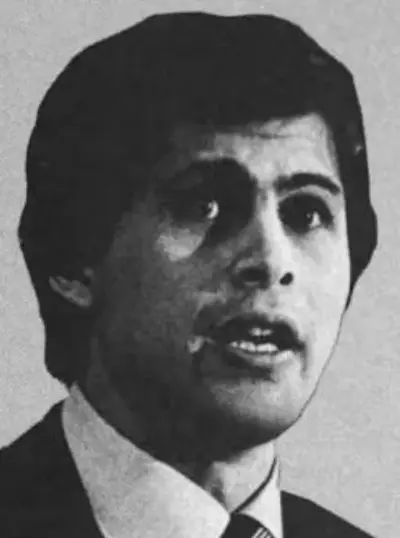
Dennis Edward Eckart is an American lawyer and politician who is a former member of the United States House of Representatives. Eckart, a member of the Democratic Party, represented Ohio's 11th congressional district from 1983 to 1993, and Ohio's 22nd congressional district from 1981 to 1983. Before being elected to Congress, Eckart served in the Ohio House of Representatives from 1975 to 1980.
