Jesse Helms Quotes
… communists and sex perverts
In the beginning of the Cold War, the Communists of the world frequently attacked the United States for its Racial Segregation and Discrimination before the Civil Rights Bill was passed. It was one of the great shames and weaknesses of America as slavery had been earlier. Southern racists then conflated the civil rights issue and Communism. Since all communists seemed opposed to segregation, then it followed, they erroneously reasoned, that all opponents of segregation were communists. See {622175} for another of Helms vicious smears using this twisted logic.
Jesse Helms, 1914-2008, U.S. Senator (Republican, NC), Description of Civil Rights Workers, Quoted in Copley News Service, August 23, 2001
Sourced by: Eigen's Political and Historical Quotations

In Helms bizarre view, the University of North Carolina which had desegregated and had Black students and faculty was communist. In the beginning of the Cold War, the Communists of the world frequently attacked the United States for its Racial Segregation and Discrimination before the Civil Rights Bill was passed. It was one of the great shames and weaknesses of America as slavery had been earlier. Southern racists then conflated the civil rights issue and Communism. Since all communists seemed opposed to segregation, then it followed, they erroneously reasoned, that all opponents of segregation were communists. See {622174} for another of Helms vicious smears using this twisted logic.

The president was commenting on a Donald Trump campaign statement that African American were in the worst shape in history when the reality was just the opposite


Lincoln had instituted the first draft in American History and it was terribly resented by many Americans. The draft laws allowed the wealthy and upper middle class to avoid service by paying a $300 fee of hiring a substitute just like in the Vietnam War the upper classes could get College Draft deferments. The mob led mostly by poor Irish, began by protesting the draft; then they attacked the mansions and houses of the wealthy; and then they went after Blacks. The Irish poor feared large numbers of Negroes coming out of slavery and competing for their jobs and lowering the prevailing wages. Blacks were beaten and lynched and 5,000 almost half of the then Negro population were driven to Brooklyn, New Jersey and the New York suburbs. It was the worst riot in United States History.

American Communist Party Newspaper. The communists were so supportive of the war effort that they were often unconditional defenders of the Roosevelt Administration’s war program. Most communists suspended their advocacy of labor strikes and Black enfranchisement during the war because it would ultimately lead to the weakening of the Allied efforts against the Nazis. Programs such as the “March on Washington Movement” were seen as untimely and therefore subversive and fascist. For more communist criticism of attempts during this period to further civil rights see {603312}


The logic of the Southern leaders and some Northern racists like FBI Director J. Edgar Hoover was to fight the Civil Rights Movement using the Red Scare. The Communist Party called for an end to legal segregation and discrimination against Negroes. Therefore, those who advocated an end to segregation were either Communists or dupes of the Communists was their “logic”.


When called upon to resign by members of the town council, he refused on the grounds that he had a right to freely express is views of President Obama or anyone else. There was no impeachment statute at the time in Wolfeboro and people were not happy about waiting for the next election. There was much pressure brought to bear including some who boycotted the town. He resigned 2 monnths later.

President Ford forced him to resign. He had been a holdover from the Nixon Administration. Ford did not chooses him. Nixon appointed him on the advice of the ultra conservatives in the party who liked the fact that he wanted to dismantle many of the FDR New Deal policies. However, he came from Indiana which was the lost racist of all the Northern States. In the 1920s Indiana had the largest membership in the KKK of any state in the Union, and Butz came from this line of racists. He also was convicted for Federal Tax Evasion.

Billy Sunday was the most famous preacher of the day. Unlike the vast majority of white preachers, he not only preached to black audiences but exuded an atmosphere of friendliness and comfort around Blacks that amazed most. Most Black leaders thought Sunday was very good for race relations, but there were some clergy like Grimke who criticized him. Sunday was castigated by many racist whites for preaching to Blacks, but he did not go as far as to condemn or preach against racism and the discrimination of the day and he would not preach to an integrated audience. Grimke, in contrast, preached to an integrated congregation and was one of the few white clergy who did in the South. (Washington DC was then a southern, segregated city.) See {585415} for another critique of Sunday.

President Johnson said this after a meeting with governors from the South and border states, who had criticized his policies on civil rights as well as his vocal support of expanded rights for blacks

In the 1940’s equality and Civil Rights was a good wedge issue for Republicans because the most racist members of Congress were Democrats even though there were many Democrats who advocated strong civil rights. In 1964, there was a party realignment after the Congress passed the Civil Rights Act. After that the most racist members of Congress and the political established switched to the Republican Party and this caused the Republicans to publicly soft pedal civil rights issues. It now became a wedge issue for the democrats, and very few national Republican figures would make such a statement as it would be misinterpreted by the racial right wing of the party.


at the Department of Justice He was commenting on the fact that when he was an official of the Civil Rights Division of the U. S. Justice Department, the Southern members of Congress would not allow any appropriated money to be spend for Civil Rights reform activities. So they would do the Civil Rights work and call it something else so the Southerners who dominated the key Congressional Committees just never knew what was happening in the Department. Ideally, government officials would not try and deceive members of Congress, but the racism of a minority of Congress had been corrupting American life and law since the Constitution was originally ratified. Somoral corruption just brought on another type of moral corruption.


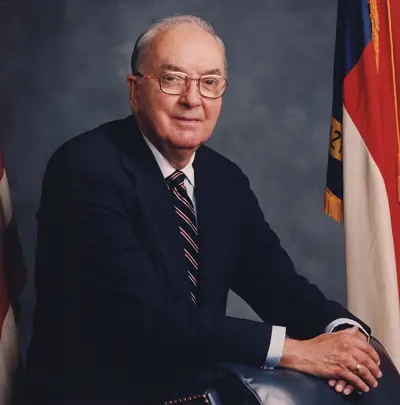
- Born: October 18, 1921
- Died: July 4, 2008
- Nationality: American
- Profession: Journalist
Jesse Alexander Helms Jr. was an American journalist, media executive, and politician. A leader in the conservative movement, he served as a senator from North Carolina from 1973 to 2003. As chairman of the Senate Foreign Relations Committee from 1995 to 2001 he had a major voice in foreign policy. Helms helped organize and fund the conservative resurgence in the 1970s, focusing on Ronald Reagan's quest for the White House as well as helping many local and regional candidates.
