OLIVER CROMWELL


Cromwell was not opposed to monarchy per se as long as it was reasonably checked. He saw Charles II as a terrible monarch. After deposing Charles, he and his associates had to come up with some form of government. As “Lord Protector” he was a de facto monarch without the trappings.
The king was found guilty and was decapitated, but not wearing a crown.
Cromwell to the Rump Parliament: These same words were used by Tory insurgent Leopold Amery in 1940 calling for the resignation of British Prime Minister Neville Chamberlain.
He was being cheered by a large crowd.
Ironically, Cromwell himself had eloquently observed that “necessity” is the avowed justification of post politicians to justify their breaking the law or doing something that is immoral and wrong. See {632372}. Also see {57408}, {599566}. But the most eloquent statement was given by Prime Minister William Pitt: {585477}
Cromwell’s motivation for Empire was different from most other English leaders, but defeating the Catholic Spanish in the New World would be another of God’s victories over the Catholics which Cromwell and many of his Puritan followers thought was the desire and will of God.
He dispatched the army to eliminate sin.
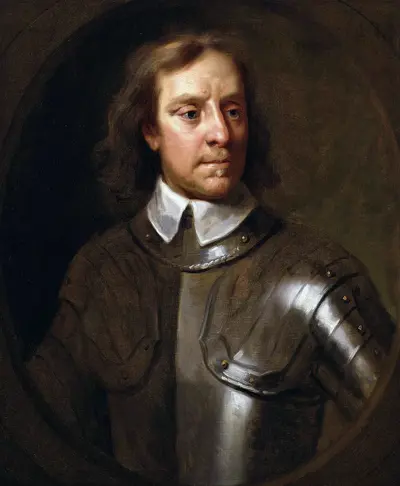
Oliver Cromwell was an English general and statesman who, first as a subordinate and later as Commander-in-Chief, led armies of the Parliament of England against King Charles I during the English Civil War, subsequently ruling the British Isles as Lord Protector from 1653 until his death in 1658. He acted simultaneously as head of state and head of government of the new republican commonwealth.
