Oliver Cromwell Quotes
Conquering Hispaniola shall provide England with the means to take forward its Puritan Revolution.
Cromwell’s motivation for Empire was different from most other English leaders, but defeating the Catholic Spanish in the New World would be another of God’s victories over the Catholics which Cromwell and many of his Puritan followers thought was the desire and will of God.
Oliver Cromwell, 1599-1658, Revolutionist, Ruler, & Lord Protector of England, Quoted in Carrie Gibson, Empire’s Crossroads: A History of the Caribbean From Columbus to the Present Day, 2015
Sourced by: Eigen's Political and Historical Quotations


He reversed the Spanish policy of keeping guns from the American Indians. He provided arms with the express intention that they destroy each other. This policy almost worked for the Indians of California but several Indian tribes were exterminated.

In 17th century England the Puritans were major opponents of the Celebration of Christmas which at the time had been celebrated mostly by Roman Catholics.


This quotation shows that the French revolutionaries wished for an invasion of England, even before Napoleon came to power. Part of the reason was the traditional enmity between France and England, even before the French Revolution, and the other part that England was covertly working against the French Revolution and ideologically stood for monarchy and inequality, while the French of the time were Republicans for whom equality was not only an ideal, but part of the law and much of post-revolutionary reality.

He was addressing the Conservatives of Ulster, the Northern Ireland province that was the center of the Orangemen movement of Irish Protestants who were fighting to retain 'Protestant Ascendency' -- which was the social, political and cultural domination of the Protestants (the minority) over the Catholics (the majority). This was best achieved by keeping Ireland a part of Great Britain as opposed to having Ireland as a separate, independent country.
Ironically America bought the Louisiana Territory from the French, and the French traded Canada to England for Guadalupe. These are probably the two worst real estate deals ever made by a nation—and it was the same nation in both cases.

Earlier, his father had also castigated the ministers over their inept hard-line handling of the American Revolution. See {641505} .

The Netherlands and Belgium then belonged to Spain. However, Protestantism was spreading to the Netherlands. The Duke was a Catholic fanatic and advised the King to send him and an army into the Lowlands to root out and kill the heretics. In contrast, the Duke of Feria counseled allowing the lowlands tolerance. The King, himself a bloody fanatic sent Alba with the army. Over the next decade he murdered and executed thousands of Protestants and many Catholics who were more tolerant and thought Alba, who was given the derogatory nickname of “The Iron Duke. Ironically, this led to the Lowlands revolting and gaining independence from Spain.
The Netherlands and Belgium then belonged to Spain. However, Protestantism was spreading to the Netherlands. The Duke of Alva was a Catholic fanatic and advised the King to send him and an army into the Lowlands to root out and kill the heretics. In contrast, the Duke of Feria counseled allowing the lowlands tolerance and warned that if the Inquisition and Alva’s army were introduced and would be feared as Alva wanted, the might get desperate and do unexpected things like revolt. The King, a Catholic fanatic himself, sent Alva and the Inquisition. In the next 12 years, fear spread throughout the lowlands. Finally, the people became so desperate that they did revolt and the lowlands gained their independence and Spain lost their most important and European possessions.


Howe had written Franklin attempting to stave off a American break with England. Franklin, with the approval of the Continental Congress, replied. This line was a veiled warning of a type of “domino effect” which indeed came to pass.


A force of 4,000 Spaniards, aided by Irish Catholics attempted to thwart the English Protestant Reformation forces in Ireland. They were defeated in their war by Lord Mountjoy. This is one of the many wars in history that was described as “holy” by one or both of its participants.

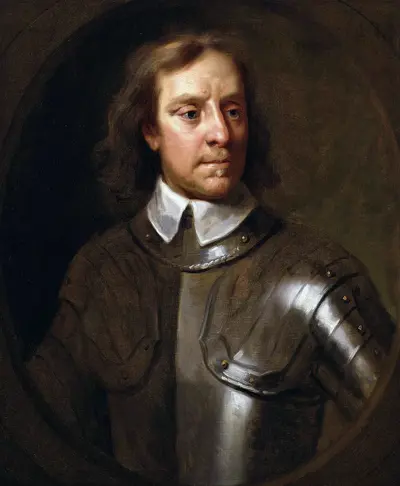
Oliver Cromwell was an English general and statesman who, first as a subordinate and later as Commander-in-Chief, led armies of the Parliament of England against King Charles I during the English Civil War, subsequently ruling the British Isles as Lord Protector from 1653 until his death in 1658. He acted simultaneously as head of state and head of government of the new republican commonwealth.
