
Context: He was right. Even the vaunted Southern Filibuster was broken by the strategy and tactics Johnson and Senator Humbert Humphry, the Floor Leader for the 1964 Civil Rights Bill.
LYNDON B. JOHNSON
(Lyndon Baines Johnson)
Context: The day before, Helms’ deputy testified about the high number of civilian casualties that American bombing of North Vietnam had caused.
Context: The President was with the way the press had handled some press releases from the White House and wanted to give the press less information.
Context: In 1964 LBJ’s Civil Rights Bill was stalled in the Senate and was being filibustered by a coalition of conservative Republicans and Southern Democrats. Johnson needed the conservative Republican Minority Leader’s support to break the filibuster and allow a vote. Dirksen changed his position and broke the filibuster allowing the Civil Rights Act of 1964 to pass.
Context: This exchange took place right after Kennedy had been assassinated. Johnson was not sure that the Kennedy staff would be loyal and responsive to him.
Context: At the time few believed he would not slow down or kill all civil rights legislation as he had done throughout his career. But this is one example of a politician telling the truth on the campaign trail with few believing him. He certainly vindicated his early civil rights record once he became president.
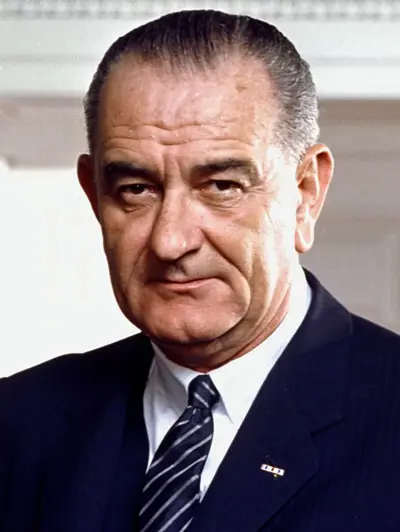
Lyndon Baines Johnson, often referred to by his initials LBJ, was the 36th president of the United States, in office from 1963 to 1969. He served as the 37th vice president from 1961 to 1963 and assumed the presidency following the assassination of President John F. Kennedy. A Democrat from Texas, Johnson was also a United States representative and later majority leader in the United States Senate. Johnson is one of only four people to have served, at various times, in all four federal elected positions.
Related Authors
