Lyndon B. Johnson Quotes
When I represented the people of Texas I voted the way they wanted. If I should be president I would represent the people of the United States and my actions would reflect their views.
At the time few believed he would not slow down or kill all civil rights legislation as he had done throughout his career. But this is one example of a politician telling the truth on the campaign trail with few believing him. He certainly vindicated his early civil rights record once he became president.
Lyndon Baines Johnson, 1908-1973, 36th President of the United States (Democrat, TX), Response to PBS interviewer who had asked the then Vice Presidential Candidate how could he represent the whole country with his Southern voting record on Civil Right, Interview, Johnson Ranch, Texas, 1960
Sourced by: Eigen's Political and Historical Quotations

The event that triggered the call was President Lyndon Johnson introducing the Voting Right Act. Russell had been a mentor to the young Johnson, a fellow Southerner who had voted against and blocked all civil rights legislation when he was in the House and Senate. However when he became President, his representation changed and he reverted to his pre-political views. {637651}

Then running for reelection as a state legislator.


When President Barak Obama asked his advice about whther or not to take the risk and approve the mssion to get bin Ladin when there is a great deal of risk to the mission, adn the intelligence was not even very sure that the target home they had identified in Pakistan really had bin Laden, Panetta told him this and suggested that he think of it the same way. The president foillowed that procedure and decided to approve the mission even though fully half of his leading advisors counseled agains the mission as being too risky with insufficient information.


This point of view is contentious in that many people (usually those at the extreme left and extreme right) think that the intention of the founding fathers was to avoid a single executive from starting a war unilaterally. Congress was given the power to declare war—not the president. Arguably public opinion is reflected by Congress, but going to war, when public opinion has been opposed to it has always turned out badly in American History.


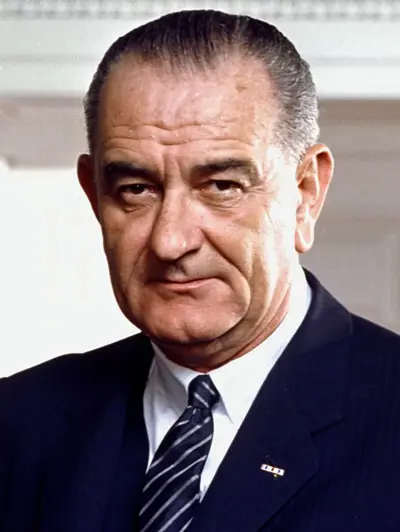
- Born: August 27, 1908
- Died: January 22, 1973
- Nationality: American
- Profession: President
Lyndon Baines Johnson, often referred to by his initials LBJ, was the 36th president of the United States, in office from 1963 to 1969. He served as the 37th vice president from 1961 to 1963 and assumed the presidency following the assassination of President John F. Kennedy. A Democrat from Texas, Johnson was also a United States representative and later majority leader in the United States Senate. Johnson is one of only four people to have served, at various times, in all four federal elected positions.
