Lyndon B. Johnson Quotes
When I tell you to do something, I want it done -- and fast.
This exchange took place right after Kennedy had been assassinated. Johnson was not sure that the Kennedy staff would be loyal and responsive to him.
Lyndon Baines Johnson, 1908-1973, 36th President of the United States (Democrat, TX), Criticism of Kennedy staffer Kenny O’Donnell, Air Force I, 1963
Sourced by: Eigen's Political and Historical Quotations


The chairman of the Public Works Committee doled out committee jobs in his home state. He was asked what these appointees did:


Miles, a hero of the Indian Campaigns (although he led the atrocities at the massacre at Wounded Knee) and then the leading military figure in America was an opponent of the policies of the new young President and had political aspirations of his own for the Presidency. Miles’ opinions were printed in the press. He maintained that he was not speaking as the Commanding General of the Army but personally as a citizen. The President surprised almost all by publicly scolding and reprimanding Miles when he next came to the White House. Five days later Roosevelt made the reprimand official, effectively ending Miles career. The issue of when senior military officers can criticize the administration has been debated ever since. Roosevelt was also a war hero himself, and although the military was shocked by such “savage” treatment of a senior officer, the President had public opinion on his side. Every decade or so there is a military official who does not care for the administration’s policies and expresses himself publicly. President Truman’s firing to General Douglas Macarthur was the most dramatic case, but Truman was well aware of the Miles and TR precedent.

The ambassador refused to use the newly installed secure, direct phone line to the State Department in Washington. the State Department in Washington


China had then a very weak government. Ching Yih was the leader of a flotilla of over 1000 ships with entire crews and families numbering a force of over 70,000 people. They raided ships and towns on the coasts. Instead of single pirate ships, they would attack, even large, well armed, ships with a fleet. Some called them pirates; some thought of them as a floating nation. In 1807 the captains of all the ships met to select a new leader. One of the captains was the widow of Ching Yih, an admiral in her own right. The flotilla under Chin Yih had been divided into 4 fleets named for colors. The White fleet had been commanded by His Kai Ching—the only female captain. However, the White Fleet had been the most powerful and successful of the four. Ching surprised the men, who had expected to elect one of the 3 male admirals as the leader of the flotilla. After, her statement, they elected her. Of the females who have ever lead at sea, she commanded the largest armada and was the leader of a floating nation and an elected leader at that.
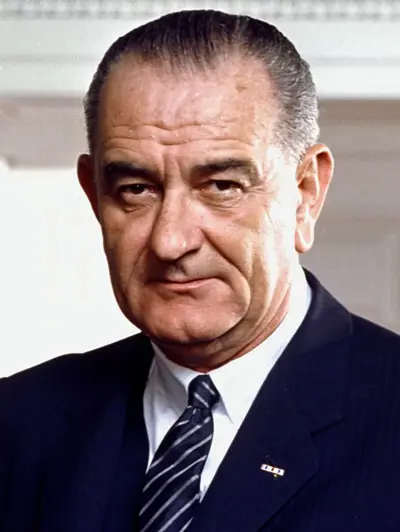
Lyndon Baines Johnson, often referred to by his initials LBJ, was the 36th president of the United States, in office from 1963 to 1969. He served as the 37th vice president from 1961 to 1963 and assumed the presidency following the assassination of President John F. Kennedy. A Democrat from Texas, Johnson was also a United States representative and later majority leader in the United States Senate. Johnson is one of only four people to have served, at various times, in all four federal elected positions.
