
Context: He was right. Even the vaunted Southern Filibuster was broken by the strategy and tactics Johnson and Senator Humbert Humphry, the Floor Leader for the 1964 Civil Rights Bill.
LYNDON B. JOHNSON
(Lyndon Baines Johnson)
Context: Adlai Stevenson had just finished a particularly good speech at the University of Texas.
Context: Referring to then Senator Hubert H. Humphrey who was popular with the left wing of the Democratic party when Johnson was Majority Leader.
Context: Johnson was then Minority Leader of the Senate. This was a brilliant statement describing the different factions of the Republican Party which at that time were rarely in agreement.
Context: The CIA had attempted to employ the Mafia to assassinate Fidel Castro, the strongman of Cuba, and Castro found out about it. He then warned that U. S. leaders could be assassinated in retaliation. Although LBJ appointed the Warren Commission to investigate the JFK assassination and the commission concluded that Castro and Cuba had nothing to do with it—Oswald was a gunman acting alone. Johnson privately never believed that but only confided his believes to his closest confidants lest there would be public pressure to retaliate against Cuba and Johnson had no hard proof—just a suspicion.
Context: The Pentagon had requested 2 more battalions of Marines to protect the Danang Air Base in Vietnam. The President was persuaded that since the South Vietnamese could not be motivated to fight, that we would not likely defeat the Vietcong and that we should negotiate a an American exit. However, his security and military advisors told Johnson that unless the manpower request was granted, our major airbase in Vietnam could fall to the enemy with large American Casualties. And there was no assurance that the North Vietnamese would even be willing to negotiate. Johnson realized at that point in time that the Vietnam War was unwinnable unless we resorted to nuclear weapons. With American lives that needed “protection” the President was caught in the dilemma that brought down his administration. He again escalated the war when he wanted to do the opposite but felt that he could not.
Context: The Texas authorities bungled the investigation, and the President under pressure, appointed the Warren Commission to conduct the investigation. That commission did poorly as well as they were lied to by both the CIA and the FBI. The autopsy report disappeared. The forensic photos of the dead president were not shown to anyone but Judge Warren; even the chief investigator—Arlen Specter—was not allowed to see them. Conspiracy theories have abounded ever since.
Context: They were discussing the Civil Right Bill of 1964 which they all wanted to pass. However, they faced a filibuster from the Southern Senators who had always before used this tactic and blocked Civil Rights legislation. However, the President here committed himself to the one way to take most of the power out of the filibuster. Accept a shutdown of the Senate, give up the rest of the President’s legislative program but the filibuster blocks all legislation that the Southerners wanted like cotton and tobacco subsidies. See the linked quotes for additional context.
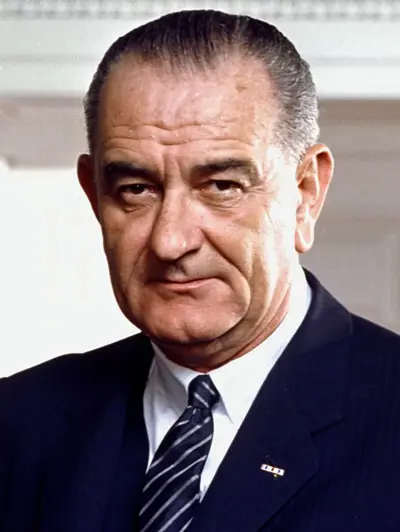
Lyndon Baines Johnson, often referred to by his initials LBJ, was the 36th president of the United States, in office from 1963 to 1969. He served as the 37th vice president from 1961 to 1963 and assumed the presidency following the assassination of President John F. Kennedy. A Democrat from Texas, Johnson was also a United States representative and later majority leader in the United States Senate. Johnson is one of only four people to have served, at various times, in all four federal elected positions.
Related Authors
