Barry Goldwater Quotes
You've got to forget about this civilian. Whenever you drop bombs, you're going to hit civilians.
Goldwater, Barry. Interview. Issues and Answers, ABC, 24 May 1964.


This is true. There never has been any International law that made a belligerent responsible for civilian damages and deaths that were the result of collateral damage. However, the United States over the years, more so than any other country. Provided huge amount of aid to the citizens of the enemy nations although there was no legal obligation to do so.


In WWII the Germans bombed London causing many civilian casualties. In retaliation, the allies bombed German cities such as Hamburg and others. The resolution’s effect was very short lived. There are similar restrictions in the Geneva Conventions but again, if one side breaks the conventions, most other sides will retaliate. Note that in the 3rd condition, the one that is most contentious in the 21st century “negligence” is the operative word. An error or mistake is not necessarily or even usually negligence. Many people believe that international law prohibits the bombing of civilians from reading 3) and similar statements from treaties. However, an honest error, mistake or equipment malfunction which kills


Calley was the officer who gave orders to kill men, women and children of My Lai, a Vietnam village which Army intelligence felt had been sympathetic and given help and assistance to the Viet Cong. Calley was convicted by Court Marshall, but was released after serving a very light sentence. No one above Cally was held in any way responsible.


The Syrian Civil War created a great dilemma for pacifists. The government of Syria was murdering civilians in large numbers if they were in areas suspected of containing rebels. Diplomacy and sanctions would not stop the slaughter. It appeared that the only way to stop the murder of so many civilians was to use military force against the Syrian government. Junger posed the moral dilemma this way.


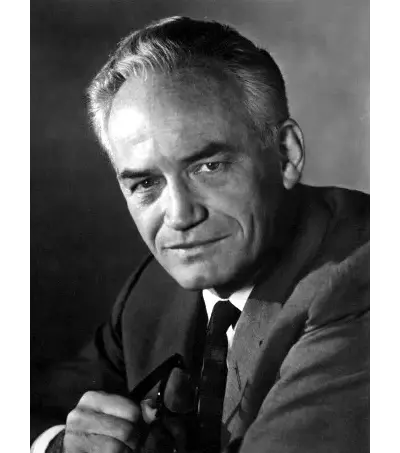
Barry Morris Goldwater was an American politician, statesman, businessman, United States Air Force officer, and author who was a five-term Senator from Arizona (1953–1965, 1969–1987) and the Republican Party nominee for president of the United States in 1964. Goldwater is the politician most often credited with having sparked the resurgence of the American conservative political movement in the 1960s. Despite his loss of the 1964 presidential election in a landslide, many political pundits and historians believe he laid the foundation for the conservative revolution to follow, as the grassroots organization and conservative takeover of the Republican party began a long-term realignment in American politics helped to bring about the "Reagan Revolution" of the 1980s. He also had a substantial impact on the libertarian movement.
