Margaret of Anjou Quotes
You have in your hands what may be easily made the foundation of the noblest realm of Europe .... if you would take the government of it into your own hands.
Margaret of Anjou, 1429-1482, Queen of Henry VI of England, Remark to her husband, Quoted in Abbott, Marguerite d'Anjou, 1861
Sourced by: Eigen's Political and Historical Quotations


The Ambassador without any authority from the State Department or the Congress engineered a group that staged a coup in Hawaii which overthrew the popular government monarchy and then “asked” to be ruled by the United States. Hawaii had been a stable independent nation, but many American businessmen and adventurers had designs on the valuable Hawaiian land. President Cleveland tried to remedy the situation {643147}, but it was too late. Haraii had become a U. S. territory and there was no going back.


The priest had come to the Empress to complain about the debauchery of her Prime Minister and made the error of describing him as the first man of the empire. The story may be apocryphal but it illustrates the character of the Empress. The source of the exact words are given in the historical novel, Luise Muhlbach, Joseph II. and His Court

The MDC was the opposition party which won the election which Mugabe would not recognize.

Indeed she did. In actuality, she was the ruler of the largest nation on Earth. However, she was not a very clever ruler and actually was responsible for keeping China very backward and weak because she was convinced that China was the most advanced of nations and very strong. Therefore nothing should be changed. Over 5 decades with no change is sure to make a nation backward, even if it started as advanced. See {620090}.


3rd Viscount Palmerston. Lajos Kossuth was the Hungarian leader of anti-monarchists who were agitating for a Parliament. While many English people sympathized with Kossuth, his government, which had good relations with England, did not want any of the other European Governments to officially meet with him. It was considered insulting to a government if a friendly government met officially with a politician who was not approved by his own government. Palmerston, as Temple was referred to, wanted to show English sympathy with the reforms advocated by Kossuth. He was then the Foreign Minister and wanted to invite Kossuth to the Foreign Ministry. However the Cabinet had a meeting and voted against the idea which would not only inflame the Hungarian government, but would outrage all the other countries in Europe for this diplomatic insult. Palmerston then decided that he would meet with Kossuth in his private residence. When the Prime Minister discovered this plan, he sent a note by messenger telling Palmerston that he was the Foreign Minister and inviting Kossuth to his home could not be seen as an official action. Palmerston has his own political base and had enough supporters in Parliament that if he would be fired, he could bring down the coalition government. So in effect he told his Prime Minister off and dared Russell to fire Palmerston. Then he went ahead with the meeting. The cabinet was upset, Queen Victoria was outraged (she never cared for Palmerson as a Foreign Minister), the Newspapers had a field day, and all the European counties complained vehemently to the Queen and the Prime Minister. But Russell didn’t dare fire Palmerston at that point. However, with Queen Victoria’s shrewd political maneuvering and Russell coalescing support, he was able to demote Palmerson to Home Secretary and assume the Foreign Ministry himself in 1952. However, Palmerston had the final winning hand, when 3 years later, he was elected Prime Minister and he and the Queen had to make a rapprochement.


After the King’s appointment in 1921 she “advised” him on establishing this regime and operating the government. At a time that women could not even vote in England, Bell was a kingmaker and major power in an area of the world that was much more sexist than England at the time.


Paine was totally wrong on this count. It is true that monarchy and aristocracy were never the same as they had been, but the American and French Revolutions were catalysts for the monarchs and aristocrats to reform. In a Darwinian sense, monarchy and aristocracy evolved, and the early members would hardly recognize the modern aristocracy of Britain and other European countries that still have them and the Constitutional monarchs of today have almost evolved into a new specie.

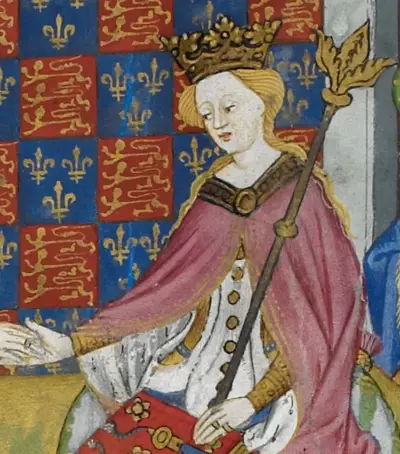
Margaret of Anjou was the Queen of England and nominally Queen of France by marriage to King Henry VI from 1445 to 1461 and again from 1470 to 1471. Born in the Duchy of Lorraine into the House of Valois-Anjou, Margaret was the second eldest daughter of René, King of Naples, and Isabella, Duchess of Lorraine.
