Mikhail Gorbachev Quotes
You cannot put Russia down on its knees and hold it there because Russia will ultimately pull out.
Gorbachev, Mikhail. On My Country and the World. Translated by George Shriver, Columbia University Press, 2000.


Webb and others believe that President George W. Bush invaded Iraq, and unseated Saddam Hussein with no intention of leaving—that the plan was to establish a permanent American presence in the Middle East.


The note was found in an abandoned Japanese camp on Bataan. There are some who believe that this note was a forgery. However, most think it genuine as it reflected one of the Japanese
“aces in the hole” to defend against an allied invasion of the Japanese mainland. It was one of the reasons that some American planners advocated use of the Atomic Bomb. Of course that was a real risk of using the bomb. The Japanese might be so angry and feel morally abused and kill the many allied prisoners they had. Many thought it was a lesser risk because it did not have the symbolic animus that foreigners occupying the Japanese homeland had. The quotation illustrates the amazing complexity that the American and allied leadership faced trying to end WWII in the Pacific.


Sherman had friends in the South and he saw rebellion and war coming. Most Southerners had a romanticized view of war and were so wrapped up in trying to preserve their economic and cultural way of life that they did not think through the implications of such a war. After and during the war, Sherman was particularly angry with the Southerners who had brought such terrible casualties and destruction upon the land and its people and he was the leader of the March through Georgiam the most effective and humiliating campaign against the South.

The final decision regarding the attack on Pearl Harbor and war with America had to be made. The Emperor Hirohito, Prime Minister Tojo, the full cabinet and leading elder statesmen were invited. Hara attended as one of the latter class. America had instituted an embargo of critical raw material whose end was contingent of Japan withdrawing from the territory that they had invaded and stop their territorial aggression in Asia, an aggression which some Japanese leaders—notably the military—was absolutely necessary to provide for the growing Japanese population and its increasing standard of living. At the time, an embargo was a powerfully effective weapon, which left Japan only two choices: Withdrawal or War. In modern times nations have chosen to endure and evade embargoes rather than be forced into undesirable positions.

The U. S. was evacuating all its forces and agents as the Viet Cong overran Saigon. This ended the Vietnam War. The CIA, had been telling the President and the National Security Staff that the Army reports were exaggerated and we were not faring well in the Vietnam War. Events proved them right. Their earlier track record, especially with President Nixon was very poor in intelligence analysis and prediction. See {634511}, {634509}, and {634503} for Nixon’s view of the CIA.

“The enemy were the Dutch revolutionists and the French who had sent a small army to assist the Dutch rebels. The Count had his Castle right near the border of Holland in the Austrian controlled part of the Netherlands.

China, which had been one of the strongest and most modern nations in the world for 1000 years had lapsed into decay and though a huge nation, rich in resources, with more people than any other had been eclipsed by Japan, America and Europe. Cixi was determined to remedy that, and to a great extent started China on the road to modernization which would take over 100 years more.


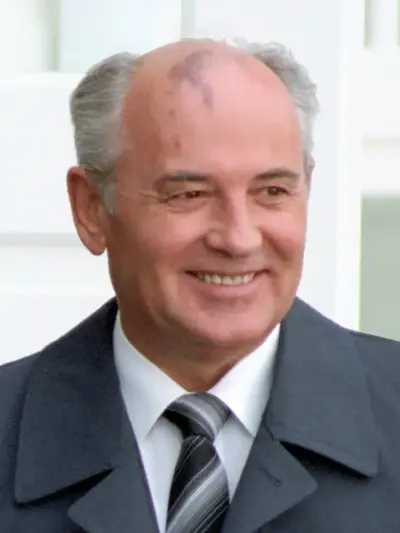
Mikhail Sergeyevich Gorbachev is a Russian and former Soviet politician. The eighth and last leader of the Soviet Union, he was the General Secretary of the Communist Party of the Soviet Union from 1985 until 1991. He was also the country's head of state from 1988 until 1991, serving as the chairman of the Presidium of the Supreme Soviet from 1988 to 1989, chairman of the Supreme Soviet from 1989 to 1990, and president of the Soviet Union from 1990 to 1991. Ideologically, Gorbachev initially adhered to Marxism–Leninism, although he had moved towards social democracy by the early 1990s.
