Anjem Choudary Quotes
You cannot have more than one leader worldwide. So, you would only have one Caliph for all of the Muslim world, so whoever that is, he would have authority over all of the Muslim land and wherever the Sharia is implemented.
Kugel, Allison. "An Interview with Radical Muslim Cleric, Anjem Choudary." PR.com, 14 Mar. 2011.


The last Caliph of the Muslims was removed in 1924 as part of the Turkish Reform. The position has had attraction for many Muslim leaders who saw themselves in the role, but since 1924, nationalism and modernism and the lack of an effective international Muslim leader has precluded it. This anti-revolutionary sentiment of the Islamic political state that is so traditional, may in part account for the Islamic tolerance of autocratic regimes. Note that the distinction between religious responsibilities and civil are important. Tyranny must be tolerated but not blasphemy or heresy. Traditional Muslims provide more tolerance and forbearance for a leader’s civil failings than religious. But Muslims were not the only people to do this. A British prime minister had a view with the same conservative logic. See {639130}. The ancient Jewish Macabean revolt against the Jewish king was all based on failure to perform required religious duties of sacrifice as opposed to tyranny and poor government which also existed. Popes excommunicated Kings for religious reasons, not because of their civil failures at governing. Holding rulers accountable for civil performance is a relatively new concept yet is indispensible in a modern democracy.


In the Middle East, counties have often made bad deals or embarked upon damaging policies in order to appear to be strong. In that part of the world there is a firm belief that showing any weakness at all will invite many different forces to go after you. Iran has this vision of Islamic world leadership and if they so not appear to be very strong and powerful to the Muslim world, their aspirations will have been for naught.

Ummah is the community of Muslims. There is historical reluctance to engage in civil war even if rulers are terrible. The unwillingness to depose the Taliban in Afghanistan or Sadam Hussein in Iraq is more comprehensible to those of the Islamic tradition than to Westerners who are more accustomed to and comfortable with revolutions, impeachments, and regime changes. Many Muslims feel that it is their religious duty to put up with a poor leader rather than bring instability and produce conflict amongst Muslims. The only exception is the case where the leader does not fulfill his religious obligations and follow the laws of God and the Prophet. This is great part explains the extreme efforts of dictatorial regimes like Saudi Arabia to support its religious establishment. As long as they do not offend the clerics, their regime is safe regardless of how undemocratic or how unfair. An-Nawawi was not just a Muslim scholar stating his own views, but he compiled his 40 Hadiths which are the views of the Prophet and carry great religious and cultural weight.
The last Caliph of the Muslims was removed in 1924 as part of the Turkish Reform. The position has had attraction for many Muslim leaders who saw themselves in the role, but since 1924, nationalism and modernism and the lack of an effective international Muslim leader has precluded it.


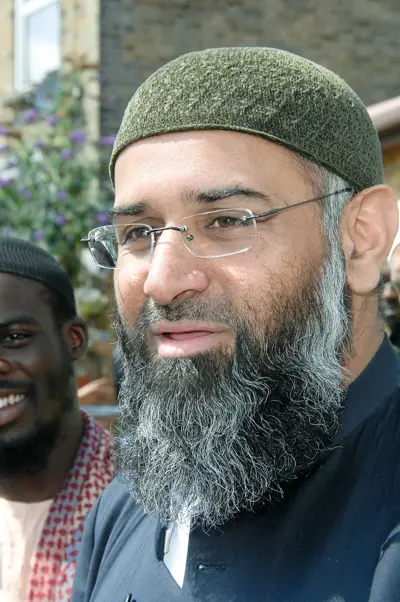
Anjem Choudary is a British Islamist and a social and political activist convicted of inviting support for a proscribed organisation, the Islamic State of Iraq and the Levant, under the Terrorism Act 2000. He was subsequently subject to sanctions by both the U.S. State Department and the U.N. Security Council freezing his assets.
