Charles Lindbergh Quotes
You ask what my conclusions are, rereading my journals and looking back on World War II from the vantage point of quarter century in time? We won the war in a military sense; but in a broader sense, it seems to me we lost it, for our Western civilization is less respected and secure than it was before.
Lindbergh, Charles A. The Wartime Journals of Charles A. Lindbergh. Harcourt Brace Jovanovich, 1970.


The congressman was distraught with the national immigration picture at that time. He believed that the influx of Hispanic immigrants into the United States would radically change the culture and the immigrant culture would then predominate. Throughout American history with every wave of immigration, there have been fears expressed about the culture of America. The Irish immigration, the Scandinavians, the Germans, Italians, Jews, the Chinese—all engendered fear that they would “take over” and radically change the country. The reality is that none of them took over but all made some changes and influenced cultural direction of the nation. The congressman was repeating an old refrain.

America, England, Germany and France Many Japanese leaders predicted war between the Great Powers while America and its European Allies did not see the danger as clearly. Shortly after 1936, Hitler began the Second World War. Japan was indeed prepared. Hiranuma became one of the Japanese extremists and after WWII was convicted of war crimes and given a life sentence.


Unfortunately, the prime minister turned out to be very accurate in his predictions. The Second World War functioned just as he said.

Lindbergh, a great aviator, was a Fascist who was a great admirer and supporter of Hitler and Mussolini. By this time, even Lindbergh had seen much of the German aggression, and his opposition to the war was on the pragmatic ground that we could not win. He thought that democracy was too unsuited to a country being a major power.


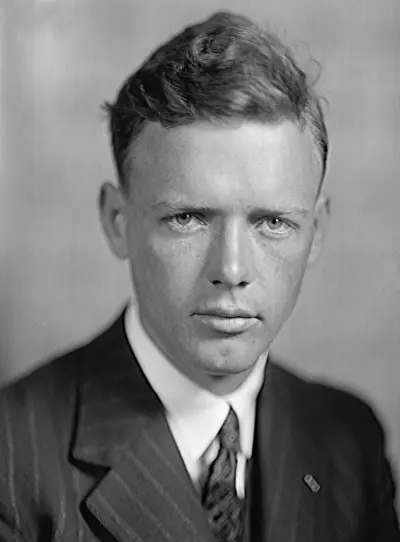
Charles Augustus Lindbergh, nicknamed Slim, Lucky Lindy, and The Lone Eagle, was an American aviator, author, inventor, military officer, explorer, and social activist. In 1927, at the age of 25, Lindbergh emerged from the virtual obscurity of a U.S. Air Mail pilot to instantaneous world fame as the result of his Orteig Prize-winning solo nonstop flight from Roosevelt Field on Long Island, New York, to Le Bourget Field in Paris, France. He flew the distance of nearly 3,600 statute miles (5,800 km) in a single-seat, single-engine, purpose-built Ryan monoplane, Spirit of St. Louis. Lindbergh was the 19th person to make a Transatlantic flight, the first being the Transatlantic flight of Alcock and Brown from Newfoundland in 1919, but Lindbergh's flight was almost twice the distance. The record-setting flight took 33 1⁄2 hours. Lindbergh, a U.S. Army Air Corps Reserve officer, was also awarded the nation's highest military decoration, the Medal of Honor, for his historic exploit. Politically, the National Hero became an active fascist supporter of Mussolini and Adolph Hitler who awarded him a Medal for Supporting Fascism, Anti-Semitism and advocating for America to allow Hitler to conquer German and the rest of Europe. After WWII he was in disgrace.
