Ameen Rihani Quotes
Yes, I am calling for an intellectual revolution that sweeps away the corruption, absurdity and error, which prevail in morals, customs, traditions, and doctrines.
Rihani, Ameen. Al-Rihaniyat. Al-Matba'ah al-Ilmiyah, 1910.


Originally it was published in Boston under the name “A Columbian Patriot.”


This quotation illustrates a scientific principle that is at the heart of several political issues. Specifically the debate over whether creationism should be taught in science classes along with evolution. The major reason that almost all serious scientists (religious and secular both) oppose teaching creationism is that it is not a “falsifiable” set of statements—that is there is no way to prove it or disprove it. There are scientific statements that can be proved or disproved but have not yet been so. To be a scientific statement, it must be falsifiable—logically provable or disprovable. And this is the logic which the Federal Courts have used in ruling that creationism may not be taught in science classes in public schools. This quotation, Pauli is saying that the paper is not falsifiable—it cannot be proved and cannot be refuted. As such it is not scientific and belongs in the realm of philosophy, literature, theology, or other disciplines, but not science. An example of non-falsifiable statements are: “Blue is the most attractive color.”; “Freedom is essential to capitalism”; “Monarchy is more efficient than theocracy”.


The public had been roused by the meatpacking scandal and the other exposes of the leading muckraking journalists—of which Baker was one. President Roosevelt had galvanized and led the public opinion to pressure congress and major great reforms were under way that would change America forever—see New York Times editorial {86516}.

The monetary corruption of the Church and many of its priests did not go unchallenged by Catholics of the day.


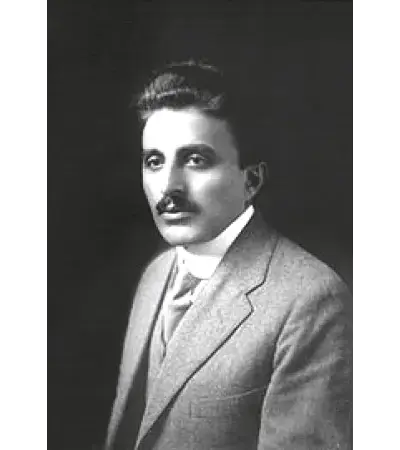
Ameen Rihani (Amīn Fāris Anṭūn ar-Rīḥānī), was a Lebanese American writer, intellectual and political activist. He was also a major figure in the mahjar literary movement developed by Arab emigrants in North America, and an early theorist of Arab nationalism. He became an American citizen in 1901.
