Wolfgang Ernst Pauli Quotes
This isn't right. This isn't even wrong.
This quotation illustrates a scientific principle that is at the heart of several political issues. Specifically the debate over whether creationism should be taught in science classes along with evolution. The major reason that almost all serious scientists (religious and secular both) oppose teaching creationism is that it is not a “falsifiable” set of statements—that is there is no way to prove it or disprove it. There are scientific statements that can be proved or disproved but have not yet been so. To be a scientific statement, it must be falsifiable—logically provable or disprovable. And this is the logic which the Federal Courts have used in ruling that creationism may not be taught in science classes in public schools. This quotation, Pauli is saying that the paper is not falsifiable—it cannot be proved and cannot be refuted. As such it is not scientific and belongs in the realm of philosophy, literature, theology, or other disciplines, but not science. An example of non-falsifiable statements are: “Blue is the most attractive color.”; “Freedom is essential to capitalism”; “Monarchy is more efficient than theocracy”.
Wolfgang Ernst Pauli, 1900–1958, Swiss Physicist & Nobel Laureate, Statement after reading a colleagues paper, Quoted in Des MacHale, Comic Sections : The Book of Mathematical Jokes, Humour, Wit, and Wisdom, 1993
Sourced by: Eigen's Political and Historical Quotations

of allegiance to the U.S. There were a number of “Copperheads” –Southern sympathizers—in the North, especially those areas that were near borders with Southern States. Some patriots proposed requiring everyone to take an oath—a solution that tends often to be suggested in times of war and strife, but really doesn’t do any good. The real traitors just falsely take the other; others who refuse, do so on principle and are rarely dangerous. Few public men had had the courage to call the process of requiring loyalty oaths absurd as Sherman did in the Civil War. In almost every era of war—cold or hot—there are some people who call for requiring more loyalty oaths and relatively few like Sherman who will publicly admit its futility.


When the Shah left Iran, the moderate religions leaders of the country. including those who were major opponents of the Shah, approached the American ambassador urging America do something to prevent the exiled Ayatollah Khomeini who had returned to Tehran from taking over the government, as they claimed he would;d create a dictatorial theocracy. Ambassador Sullivan was convinced tghatg America should work with the new government an d negotiate with them for moderation. See the related quotes for more of his erroneous thinking.


Describing General Maxwell Taylor, Chairman of the Joint Chiefs of Staff:


Characterizing the Declaration of Independence:

He was known as “The Christian Cicero” because of his rhetoric. He contributed little original Christian thought but communicated it more so than anyone had done before. Interestingly, the early church fathers did not see the concept of a round earth as heretical—just absurd. When the idea began to be seen as potentially serious heresy would be almost 1000 years later.

The public and the educators were outraged and no sooner was the school closed, than immigration had people moving to New York created a need for more high school capacity. La Guardia was one of the few politicians who tended to admit his mistakes, go on and fix them and then do some other “good stuff.” Others argue that he was so popular so he could admit to anything and get away with it. This was perhaps true, but one of the reasons for the great popularity was extreme honesty and candor and a minimum of hypocrisy.
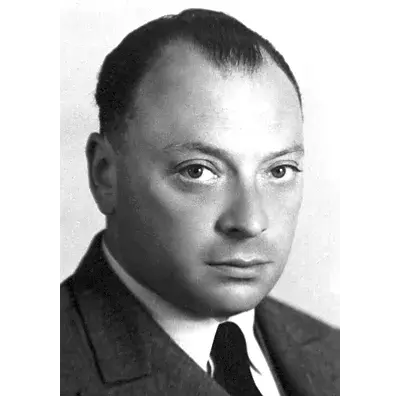
Wolfgang Ernst Pauli was an Austrian (and later American / Swiss) theoretical physicist and one of the pioneers of quantum physics. In 1945, after having been nominated by Albert Einstein, Pauli received the Nobel Prize in Physics for his "decisive contribution through his discovery of a new law of Nature, the exclusion principle or Pauli principle". The discovery involved spin theory, which is the basis of a theory of the structure of matter.
