Winston Churchill Quotes
World Habeas Corpus is the difference between civilization and tyranny.
See Luis Kutner, the originator of the concept.
Winston Churchill, 1874-1965, British Prime Minister (Conservative), 1950
Sourced by: Eigen's Political and Historical Quotations


Even in the United States, there have been occasions where this has happened such as the Japanese American internment in WWII, and the George W. Bush Administrations actions in fighting the War on Terror. Yew was in opposition at the time he made this famous statement. 30 years later when he was the Prime Minister, he had a different view. See {585201}.

Sealed under duress and later repudiated by the King with Papal assistance


Mosley had been incarcerated without charges or trial under the “national emergency” of the Second World War. This prevented him from organizing his “Blackshirts.” When it was clear that Germany would lose the war, Oswald was released, but without the prospect of Fascism dominating continental Europe, there was little interest in Fascist movements in England.
Responding to suggestions that drug traffickers be summarily executed:


In the aftermath of 9-11, a few government agencies violated the law and civil rights of a number of “Muslims” and/or “Middle Eastern looking” individuals and held them incommunicado with no charges and no warrants. The rationale of those agencies is that they “could not take a chance as lives were at stake. In most major wars in America, there has been an “overreaction” by some officials.

The Jury Trial was part of New York Law more than a century before the Constitution.


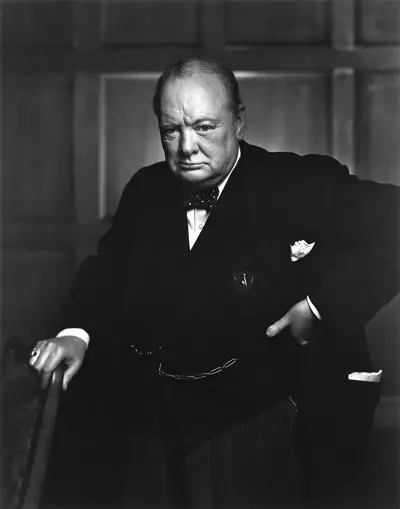
Sir Winston Leonard Spencer Churchill, KG, OM, CH, TD, DL, FRS, RA was the Prime Minister of the United Kingdom from 1940 to 1945, during the Second World War, and again from 1951 to 1955. Apart from two years between 1922 and 1924, Churchill was a Member of Parliament (MP) from 1900 to 1964 and represented a total of five constituencies. Ideologically an economic liberal and imperialist, he was for most of his career a member of the Conservative Party, as leader from 1940 to 1955. He was a member of the Liberal Party from 1904 to 1924. Churchill was also well known for his military career and as a historian, painter and writer, and among his many awards was the Nobel Prize in Literature.
