Simon Bolivar Quotes
Without delay and without exception, you will put to the sword every Spaniard in dungeon or hospital …
1000 Spanish prisoners of war were over a 4 day period beheaded. This infamous order has been a black mark on his general democratic and humane public life. Some apologists for his war crimes point out that the Spaniards were making an all-out assault on his revolutionary troops who were very badly outnumbered. It took many revolutionary solders to guard the prisoners and if Bolivar lost the upcoming battle, it would have been the end of his revolution and Spain might still be in control of much of South America. With the additional soldiers freed up from guard duty, Bolivar barely survived the battle and the Revolution was not crushed.
Simon Bolivar,1783-1830, President of Venezuela & Colombia, Founder of Bolivia & Revolutionary leader, Order to his troops
Sourced by: Eigen's Political and Historical Quotations

These battles with the Irish—in this case the MacDonnell clan—were brutal atrocities where the winners of the battle killed all the losers and the women and children with them in the case of the Irish.
The Philippine-American War was terribly brutal. In response to insurgent atrocities against American soldiers, some of the Americans also adopted brutal tactics including torture and mutilation. Washington had heard stories of this improper behavior in the part of some American troops and instructed the senior officers to investigate and discipline the men if the reports were true. Unfortunately some of the senior officers covered up the illegal and criminal behavior of some Americans. This quotation was taken from a New York Times report on a representative of the Red Cross who went to the Philippines at the invitation of the insurgents. He generally found serious atrocities by some of the soldiers on both sides but by no means all of the combatants. General Otis, the U. S. Commander tried to keep Blake out, and had him detained away from the battle areas for some weeks where he was “educated” about the enemy atrocities. Finally Blake got to the field and reached the insurgent commander who had invited him. His report generally praised the American troops, but spared no details when there were guilty of atrocities.

It is not known whether Agamemnon ever existed other than in Greek legends. The “quotation” comes to us from Homer’s Iliad which itself was based on oral histories before and itself was oral for years before it was written. So the dialogue may be written by Homer. However, if real, was the earliest reference to genocide. The photograph is of a mask believed to be of the period but there is no certainty is was the King even though was associated with him by Heinrich Schliemann—the 19th century archeologist who found the object.


Japanese military culture of the time was that a soldier who surrendered, even if wounded, was totally dishonorable and therefore could be abused and killed. The American marines then retaliated, and after that, the Americans also took no live prisoners contrary to American military regulations. This incident shows how difficult it is to maintain military professional standards and regulations if the other side does not. Similar situations existed in most American wars, but by the end of the 20th century, the all volunteer military had become much more professionalized and disciplined, and there were relatively few American atrocities despite many provocations.


A number of the American soldiers refused to obey Calley's illegal order. Some helped some villagers to escape, and a helicopter pilot landed betreen Callery's men and the villagers they were shooting at, and ordered his helicopter machine gun crew to fire on the soldiers if they did back off. The soldiers stopped firing at the civillians. However, his and other reports of the massacre were covered up by the military for a few years. Mai Lai was not the only major war crime perpetrated by Americans in the Vietnam War; there had been a few others. But given the years of fighting and the many opportunities war crimes violations under orders were quite rare. The Viet Cong had many more war crimes that they perpetrated, and our South Vietnamese allies repeatedly committed war crimes against their own people.


The Christian Crusaders had captured Jerusalem and slaughtered the Muslim civilian inhabitants. In the 21st century, some Islamic terrorists justified the beheading of captured Christian prisoners as revenge for this massive Christian beheading of Muslims almost 1,000 years earlier.

14 Arab Armies in a coordinated attack on the 1 day old Israeli state, intended to massacre all the Israelis as demonstrated by this quote. Note that this kind of extermnination intent was advertised with pride. To everyone's surprised, the Jewish defenders not only beat back the viscious attacks but enlssarged their terroitory by capturing strategic sites from which the attacks had been launched. Many people credit to the Israely victory to the fact that they were litterally fighting for their lives. Defeat would have meant death for them and their families. The Arab armies, in contrast, were fighting for land that other Arabs claimed that should have been theirs. The willingness to stand and fight for this goal did not match the self preservation that motivated the Israelis--especially in the aftermath of the Holocaust killing 6 million Jews in WWII.
There are some who argue that the quotation was made earlier and was not meant as an incendary call for massacre of Israelis. It well may be that in his original thinking, he was predicting what would happen if the State of Israel was created, basing his thoughts on historical artrocieties of the past. And many think he was concerned about that possible outcome and was trying to avoid it. The import of the quotation was not necessaruly to hisltorically blame Assam for the point of view but to simply establish that there were many Arab voices calling for victories of history where there were massacres in the Middle East. And there were those who took Azzam's quotation and broadcasted it on Arab radio, calling for the very massacre that Assam may have been warning about. Note that this notion of Jewish massacre and extermination was also picked up 60 years later and called for by the President of Iran.


He was then a young Lieutenant.
Description of the tactic of terrorism as employed by Attila the Hun. This is one of the first articulate descriptions of the motivation of terror tactics.
The U.S. was at war with Spain and Filipino insurgents for the control of the Philippines. During this war there were a few senior U. S. Officers who in later times would have been tried and jailed for war crimes. The men under them were brutal and committed atrocities at their orders. See {615368}.


The Union government had resorted to printing Greenbacks {619940} to finance the war. However, that left two different U. S. currencies in circulation, and speculators soon began buying one and selling the other as the Greenback ‘market’ flourished or sank with the results of each battle. This caused substantial economic dislocation in the Northern Economy and was thought to be of great help to General Lee’s war effort. Lincoln had little charity toward the speculators.

Clark’s men had English Colonel Hamilton under siege by making him think there were many more Americans in Clarks army than the real 180 or so. He tried to get Hamilton to surrender by threatening if they had to take the fort they would treat Hamilton and the British as murderers—Hamilton had paid hostile Indians for American scalps. At that point a party of Clark’s men arrived with 4 or 5 Indian prisoners who had been captured raiding
civilian farms. After the Indians were executed, Hamilton agreed to surrender.

The Colonel defined people capable of bearing arms as males and females over 20 years of age. Many were slaughtered. Fortunately, most of his officers and men did not follow this order but enough did to make it one of the most disgraceful events in American military history. Smith was court marshaled and found guilty but his punishment was to be cashiered from the army. There were many atrocities committed by the minorities of both sides in this brutal war. Military and Congressional Investigations caused the army manual to be revised military policies reformed.

The import of this quotation is to see how matter of fact, atrocities by our standards, were committed in the earlier times. “Beys” was an Ottoman term for a class of nobles.
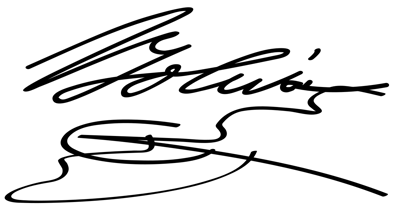
Simón José Antonio de la Santísima Trinidad Bolívar y Ponte Palacios y Blanco (Spanish: [siˈmom boˈliβaɾ] (listen), English: /ˈbɒlɪvər, -vɑːr/ BOL-iv-ər, -ar also US: /ˈboʊlɪvɑːr/ BOH-liv-ar), also colloquially as El Libertador, was a Venezuelan military and political leader who led what are currently the countries of Venezuela, Bolivia, Colombia, Ecuador, Peru, and Panama to independence from the Spanish Empire.
