Mao Zedong Quotes
Without armed struggle neither the proletariat, nor the people, nor the Communist Party would have any standing at all in China and it would be impossible for the revolution to triumph. In these years [the eighteen years since the founding of the Party] the development, consolidation and bolshevization of our Party have proceeded in the midst of revolutionary wars; without armed struggle the Communist Party would assuredly not be what it is today. Comrades throughout the Party must never forget this experience for which we have paid in blood.
Mao, Zedong. "Introducing The Communist." Selected Works of Mao Tse-tung, vol. 2, Foreign Languages Press, 1965, p. 292.


Lenin, Uritsky, and other Bolshevik leaders were attacked in 1918. Lenin was wounded but Utrtsky died, and this triggered the attacks on the other Russian factions by the Bolsheviks known as the “Red Terror.”

There were massive strikes in Italy. These strikes began in the engineering factories and soon spread to railways, road transport, and other industries. The strikers, however, did more than just occupy their workplaces, they seized them for themselves. Soon 500,000 strikers were at work, producing for themselves. See {616351} for a description. The question was what next. Malatesta and others recommended that they go on and take over the government and not just try and have better labor conditions and factory operations. He warned that the capitalists and middle class bourgeoisie had been so frightened by the successful national strike that they would even ally with the Fascists who they did not like either. That is how Mussolini and his Fascists came to power.

Rival to Mao. This quotation is historically important because it shows how intensively the Chinese Communists concentrated on organizing the fringe and unpopular groups of society to the point where the struggle was between Chiang Kai-shek’s Nationalists and everybody else. The Chinese Communist coalition included many who had not idea of what communism was but knew that Chiang Kai-shek and the Nationalists were not very good for them or the people they knew.

Mengustu seized power in a coup. However his Marxist Dictatorship was very unpopular and a civil war soon started. The poorly armed opposition used guerrilla warfare insurgency techniques. Since the government was hated by most people there was much support for the guerrilla in the villages and countryside. Mengustu adopted a policy of genocide. The areas of the country which were sympathetic to the revolutionaries were then systematically starved by the government withholding food and attacked by allies who he armed.


Only 6 years after the Russian Revolution Lenin was already being perceived as an international provocateur and instigator of problems.

This was only 6 years after the Russian Revolution. Communist Russia had extended its influence to much of the world without firing a shot. To many, communism looked like the future. The Russian inability to make communism work economically in the next 70 years destroyed most of its influence.


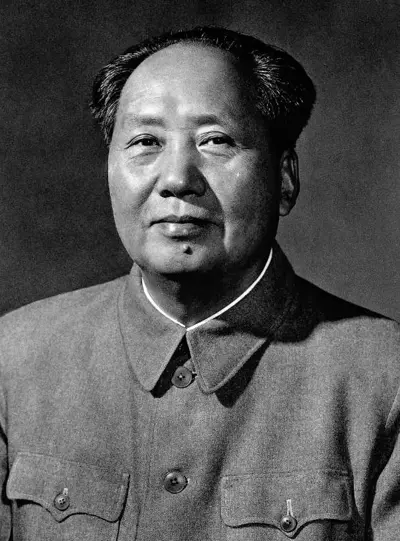
Mao Zedong, also known as Chairman Mao, was a Chinese communist revolutionary who was the founder of the People's Republic of China (PRC), which he ruled as the chairman of the Chinese Communist Party from its establishment in 1949 until his death in 1976. Ideologically a Marxist–Leninist, his theories, military strategies, and political policies are collectively known as Maoism.
