Lord Robertson Quotes
Within NATO, our Defence Capabilities Initiative has identified the essential capabilities all Allies must have for modern operations, and Allies are working to meet those requirements.
Robertson, George. "NATO in the 21st Century." Welt am Sonntag Forum, Berlin, Germany, 24 Jan. 2000. Speech.


He later provided a copy to Hezekiah Niles, February 5, 1819 which is the source of the quotation since Henry never mentioned it.


Clark had commanded the American and NATO forces in the Serbian War where all the military and political objectives were accomplished with heavy losses to the Serbian’s and none to the allied side—what many think was the most successful war in American History. Like Eisenhower in WWII one great challenge was the political and strategic one of keeping the coalition of all the allied governments working together. His perspective had been like Eisenhower’s which was much wider and geopolitical than most military officers.


He had wanted more troops for the Afghan War than President Obama would approve. The Republican members of the Congress tried to make the difference a major issue of a President not supporting his commanders. The General made this brilliant response.


See {615006} for but one example of terrible military money and procurement management.

even though in this case the objective The State Department, the Defense Department and most important President Kennedy had decided to get rid of Diem. Most of the Central Intelligence Agency thought that this was a very unwise policy, because Diem was a known risk, and the people who would replace him and their talents and policies were unknown. The negatives of Diem—the facts that he, a Christian, was persecuting the majority Buddhists, was totally corrupt, and not a very good leader was less distressful to the CIA than to the President and the other agencies as the intelligence agency frequently not only tolerated “offensive” allies, but actually employed them including war criminals. Another importance of this quotation is that it shows that it was by no means certain that the CIA would always follow the orders of the President and the government policy makers. Colby, who was not the agency director at that time but was the head of the South East Bureau, was one high level official who argued that the policies should always be followed even if they were unwise or foolish. Another importance of this quotation is that it illustrate a common error that administrations are frequently forced to make: making a policy decision to eliminate a problem while not having much of an idea of what the alternative or consequence would be when the policy is implemented. The Syrian Civil War in 2013 was a good example. The Government side appeared to have used Chemical Warfare on Civilians and public opinion demanded that we do something. However, having a no-fly zone or any of the alternatives to prevent (punish) the government for the Chemical Warfare would strengthen the rebel side which was made up of numerous factions—some of which were known Islamic fundamentalist terrorists and jihadists. If the balance of power were tipped toward the rebels, the consequence for the American national interests were unknown—just as the consequence of ousting Diem was unknown and turned out to also be bad and was probably worse.

He made this statement even before 9-11.
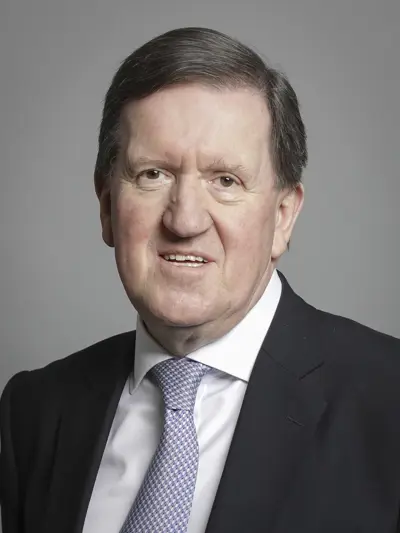
George Islay MacNeill Robertson, Baron Robertson of Port Ellen, KT, GCMG, PC, FRSA, FRSE, is a British politician of the Labour Party who served as the 10th Secretary General of NATO from 1999 to 2004; he succeeded Javier Solana. He served as Secretary of State for Defence from 1997 to 1999, before becoming a life peer being created Baron Robertson of Port Ellen, of Islay in Argyll and Bute, on 24 August 1999.
