Jacob Duche Quotes
With that prudence and delicacy, therefore, of which I know you possessed, represent to Congress the indispensable necessity of rescinding the hasty and ill-advised declaration of independency. Recommend, and you have an undoubted right to recommend, an immediate cessation of hostilities. Let the controversy be taken up where that declaration left it, and where Lord Howe certainly expected to find it left. Let men of clear and impartial characters, in or out of Congress, liberal in their sentiments, heretofore independent in their fortunes,--and some such may be found in America,--be appointed to confer with his Majesty's Commissioners. Let them, if they please, propose some well-digested constitutional plan, to lay before them at the commencement of the negotiation. When they have gone thus far, I am confident the usual happy consequences will ensue; unanimity will immediately take place through the different provinces; thousands who are now ardently wishing and praying for such a measure, will step forth, and declare themselves the zealous advocates for constitutional liberty; and millions will bless the hero that left the field of war, to decide this most important; contest with the weapons of wisdom and humanity.
Duche had given the first prayer in the First Continental Congress {583741} and was an early patriot. However, he was captured by the British and pressured to write to Washington asking him to stop the fighting. John Adams wrote to his wife: “Mr. Duche I am sorry to inform you has turned out an Apostate and a Traytor. Poor Man! I pitty his Weakness, and detest his Wickedness.”
Jacob Duche, 1737-1798, Protestant Minister & Rector of Christ Church in Philadelphia, Pennsylvania, Chaplain to the First Continental Congress, Letter to George Washington, October 8, 1777
Sourced by: Eigen's Political and Historical Quotations

This quotation is the first prayer of the first Congress. Some advocates of a more religious role in government use this quotation to illustrate that not only was religion a part of the first Congressional deliberations, but it was a Christian prayer. Of course, the Constitution would not be created for another 13 years and there was no provision for separation for church and state in the Continental Congress—there was not even an executive. Duche was later captured by the British and was persuaded to write a letter to George Washington {583740} asking that he lay down his arms. John Adams described him to Abagail: “Mr. Duche I am sorry to inform you has turned out an Apostate and a Traytor. Poor Man! I pitty his Weakness, and detest his Wickedness.”

1st Earl of Beaconsfield. Contrast this statement with that of Neville Chamberlain returning from Munich in 1941. Disraeli had threatened war and forced the Russians to accept all the British demands by diplomatically isolating them first and moving armed troops into position just before the peace conference.


Lee was trying to negotiate a peace treaty as a part of his his potential surrender. However, Grant would not be drawn into that, Lee was NOT the government of the Confederacy, and Grant had served with him earlier in the Mexican War and knew he was not a fanatic on teh subject of slavery and race as most of the Southern leaders were. They werenthe ones who would have to be captured or driven to surrender. Grant could have gotten authoirioty as he was in almost real time contact with President Lincoln by telegraph. However, neither wanted to negotiate peace with Lee. Instead, Grant gave Lee and his men incredibly gracious termsof surrender which he and Lincoln hoped would casue the avarage Southern soldiers to feel better about surrender for although Lee's was the largest Confederate Army, there were still others out there that had to be dealt with,

His appeal was also in the name of concurring heads of state of Finland, Holland, Denmark, Norway, Luxemburg, and Sweden.


Generally after civil wars there have been extensive reprisals and trials of the winning side against the losing one. Lincoln was determined that this pattern not be followed as the bloody war was coming to an end. Ironically, Andrew Johnson, Lincoln’s successor and a Southerner, was, together with some of the Radical Republicans, in favor of trying many of the Southern leaders for treason and rebellion. Lincoln’s view however and that of the moderate members of Congress prevailed. However, the Southern Whites generally would not comply with the Constitutional Amendments and laws regarding the role of the Negro, and Johnson was very sympathetic to their racism which led to a conflict between Johnson and Congress.


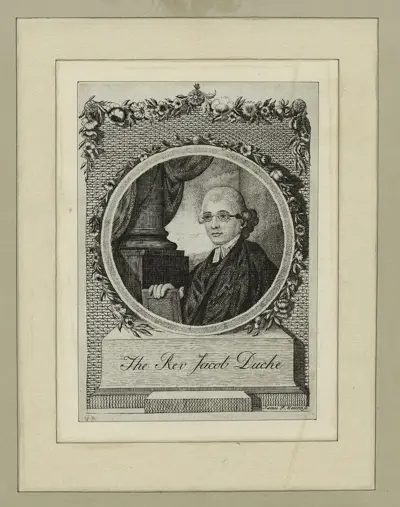
The Reverend Jacob Duché (1737–1798) was a Rector of Christ Church in Philadelphia, Pennsylvania, and the first chaplain to the Continental Congress.
