Henry A. Wallace Quotes
With a fascist the problem is never how best to present the truth to the public but how best to use the news to deceive the public into giving the fascist and his group more money or more power.
Wallace, Henry A. "The Danger of American Fascism." The New York Times, 9 Apr. 1944, p. SM4.

Prior to Germany Declaring War on the United States, there was a small but influential group of American Fascists who were great admirers of Hitler and Mussolini and the “reforms” they had made in Germany and Italy. They saw Germany’s invasion of other European nations as a good think to “reform” Europe. The opposed American support of England and U. S. entry into the war. Their influence waned after Pearl Harbor and Germany declaring war on the U. S. Many of them arose again after WWII ended but they no longer expressed admiration for Hitler and Mussolini—concentrating at that time on anti-communisim. This caused some difficulties for the majority of anti communists who were also anti fascists.


Accusing her of being a fellow traveler with Communist sympathies, Nixon called her "the Pink Lady" and said she was "pink right down to her underwear." See {627826} and {619498}. Douglas and her campaign thought the accusations were so absurd that at first they did not even bother to respond. Nixon repeated the them and stayed “on message” and by the time that Douglas, who had opposed communism all her life, was believed to be one or at least a “fellow traveler” by most Californians—and finally she responded with statements like this, but it was way too late to turn public perception around. She awarded Nixon the derogatory nickname “Tricky Dick” which the majority of the public used for him throughout his career--{600036}.


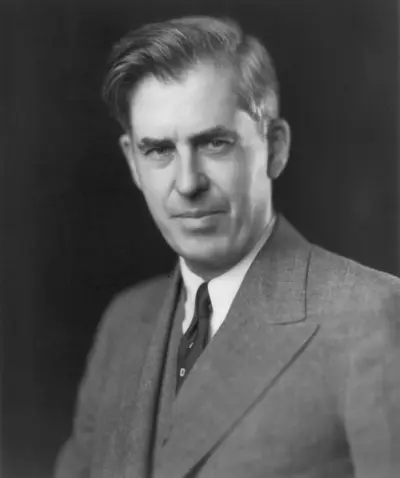
Henry Agard Wallace was an American politician, journalist, farmer and businessman who served as the 33rd vice president of the United States, as well as the 11th U.S. Secretary of Agriculture and the 10th U.S. Secretary of Commerce. He was also the presidential nominee of the left-wing Progressive Party in the 1948 election.
