James Burnham Quotes
Why in the world should any sensible person give a damn what some spokesman for cannibalistic tribes or slave-holding nomads thinks about nuclear tests?
James Burnham, 1905-1987, Founder, Congress for Cultural Freedom, Director, Political & Psychological Warfare Division, CIA, Attack on the United Nations, Quoted in The New Criterion, September 2002
Sourced by: Eigen's Political and Historical Quotations


Half a century later there were many Asian countries which had adopted democratic style governments. While Kennan was right at the time, what he did not anticipate is the rapid rise of communications technology and the consequent expansion of American cultural values. The Asians became different people, and when they did so, they adopted democratic forms of government albeit more heavily guided by strong leaders than America and other industrial democracies.

Kahn was the leading scientist behind the Pakistan nuclear weapons program. However, he then was personally involved in not only selling nuclear secrets to other counties but to terrorists as well. He personally enriched himself while enabling nuclear proliferation in the world. The article was an expose of his dishonest and illegal activities. The Pakistan government was in a bind. Kahn was a national hero, the only Pakistani who had ever won the Nobel Prize in a Scientific Field. Convicted and then pardoned by the President, but he was put under house arrest and surveillance and banned from any activity involving technical assistance to others. Kahn’s religious bigotry towards Hindus as disclosed by his letter made him even more of an international pariah. See {586386} for other attacks on his critics.

The title of this controversial poem became a rallying cry for imperialists and anti-imperialists both. The imperialists saw it as a justification for expansionism and colonialism—that the white had a moral responsibility to bring civilization to the other races. To the anti-imperialists it was a racist justification for imposing Christian values on the rest of the world which didn’t want them. In the quotation example here, the poem was used to state a dilemma of foreign aid and trying to bring democracy and freedom to the world.

The “We” to which he was referring were the British officials and civil servants who governed all of India as a colony of the British Empire.

The debate was on a proposal to increase the female marriage age to 14. Most objected to it on the grounds that it violated Hindu religious tradition.

The planners of this particular war effort involved many ideologically correct supporters of a neo conservative agenda from the United States and the other Allies more knowledgeable diplomats and military people were kept our of the effort lest they disagree with administration ideology or policy. The result was a very badly mismanaged occupation phase of the war after a very well managed invasion effort.


this is a joke Tutu has used, but variants of it exist which are not original to him.

The fascist, military clique that ran Japan at the time had no respect for treaties or International Law as understood by most Western nations. China was a land of warlords and corrupt military leaders. There was then an extensive history of Anti-Asian feeling and activity in America. Stimson, made the classic mistake of correctly assessing the Japanese leaders but generalizing from them and some Chinese corrupt military leaders to all Asians and their governments. Indeed, after the American occupation of Japan ending WWII, the Japanese adapted to democracy very well and have been instrumental in making and keeping many international treaties,

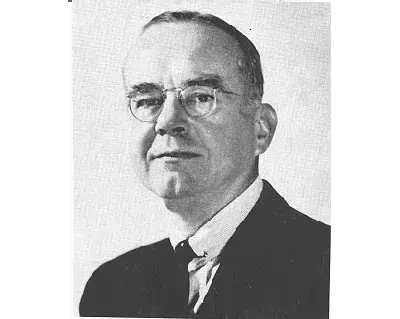
James Burnham was an American philosopher and political theorist. He chaired the philosophy department at New York University; His first book was An Introduction to Philosophical Analysis (1931). Burnham became a prominent Trotskyist activist in the 1930s. He rejected Marxism and became an even more influential theorist of the right as a leader of the American conservative movement. His book The Managerial Revolution, published in 1941, speculated on the future of capitalism. Burnham was an editor and a regular contributor to William F. Buckley's conservative magazine National Review on a variety of topics. He rejected containment of the Soviet Union and called for the rollback of communism worldwide.
