Faisal Al-Qasim Quotes
Why does every nation on earth move to change their conditions except us [Arabs]. Why do we always submit to the batons of the rulers and their repression. How long will Arabs wait for foreign saviors?
Part of the problem lies in a part of the Muslim religion which values stability over all else except Islam itself. Traditionally Muslims have been told to tolerate a bad, corrupt leader, unless he is blasphemous. So dictators who can create an alliance between themselves and the religious influentials by giving them money and allowing them to control civil society as in Saudi Arabia, have been insulated from rebellion and revolutionary forces.
Faisal Al Qassem, Syrian Talk Show Host, Opening of his Al Jazeera Talk Show, December 2003
Sourced by: Eigen's Political and Historical Quotations


Those who have fought against dictatorial governments for their basic human rights, found after victory and the overthrow of the dictator, that there was another force fighting for control which would deny citizens human rights based on a theocracy. They wanted the end of the dictator so they could use their interpretation of a religion as the excuse to deny all citizens basic human rights.

Chile with help from San Martin had ejected the Spanish. O’Higgins, the Chilean leader had joined up with San Martin and served under his command. The sectional rivalry bothered men like Carrera. Instead of seeing all the South Americans fighting the Spanish as allies as O’Higgins did, Carrera and his brothers refused to join a government of unity and they and their troops were just as dictatorial and cruel as the Spanish had been. O’Higgins gave Indians and Blacks equal rights with whites which distressed the aristocratic Carrera’s. Finally the Carrera’s tried to set up their own government, and the new Chilean government disarmed their militia and executed two of the three Carrera brothers who were leading the militia troops who were little more than thieves and brigands.

The Germans allied themselves with the Islamic insurgency of the day as a strategic maneuver. The Grand Mufti of Jerusalem broadcast propaganda from Nazi radio in Berlin and was dispatched to organize Muslim fighters in Iraq. Fascism was introduced into the Middle East and the Arabs and Persians saw it as a natural extension of their authoritarian and highly prescriptive forms of religious and civil government. 60 years later, there would be Islamic Fascists throughout the Middle East in control or vying for control of many of the countries.


What is particularly interesting about this passage is that a Middle Eastern contemporary historian and commentator compared circumstances to political events with the Umayyads and the Abbisids to those in Persia and Rome. Chosroes (Khosrow) was a Persian King who had his brothers murdered, and Caesar was viewed as a tyrant. Even then, the history of politics, in one country influenced events and attitudes in others,

Babeuf led a faction of French revolutionists who thought that the revolution had become to hierarchical and had substituted a dictatorship of certain citizens for the dictatorship of the King. He was arrested and executed by the hierarchy he was trying to replace in what has become known as the “conspiracy of the equals.”

Shortly after the failed uprising the Mufti went to Berlin where he was made a Nazi SS Major General and set up Arab SS Units to exterminate the Jews in the Middle East. See {586894}.


In one of the most unusual revolutions in world history, Brazil became independent from Portugal via a revolution led by the son of the Portuguese King and heir to the throne, Pedro I. Ironically the King of Portugal, John VI, in this famous quote, encouraged his son to lead the revolution. There were strong separatist sentiment in Brazil and the King thought it would be better to have an independent Brazil lead by a member of his family.

This statement is referring to the custom of women covering their eyes whenever a man who they did not know passed them. Turks did not ever use Burkas the way some other Muslim countries do, but they wore headscarves and covered their eyes when a strange man appeared. This was a shocking statement in a sexist Islamic culture. Although the process of modernization and reform in Turkey was relatively bloodless, Ataturk was prepared to and did use force to defend it. This and many others made the role of women not only uniquely equal in the Islamic world, but women were suddenly elevated to the level of most Western nations and in voting rights were ahead of most. He used his own family to set an example. See {584503}.

He was discussing the problem of negotiating with the Iranian government which was an unelected, dictatorial theocracy.
This quotation is used by the moderate Egyptians and other moderate Arab leaders as well as Israelis and other experts in combating Islamic Fundamentalism to illustrate the thinking process of the Muslim fundamentalist terrorist leader. They are more than willing to sacrifice those they lead (though rarely themselves) if they think that something is to be gained. But if there is nothing to be gained, their “moral” responsibility requires not “wasting” their followers’ lives. Therefore, the way these experts believe they should deal with the radicals is to face them with overwhelming force (a variant of the Powell Doctrine) and never concede anything or let them gain anything from violence. A single concession makes the terrorism, sacrifice and violence worthwhile, but if there is no gain, the leader has wasted the lives of his followers and is less likely to initiate another attack.

The glorious spectacle of eighteen millions of people, struggling to burst their chains and be free.
The entire speech was translated into Spanish and read to great applause to Latin American revolutionary regiments.

Martin, then a young sailor had set forth from France to fight the Japanese in World War II. By the time he arrived in the Pacific, the Japanese were defeated and France was again trying to dominate Vietnam. It was a radicalizing experience for him.

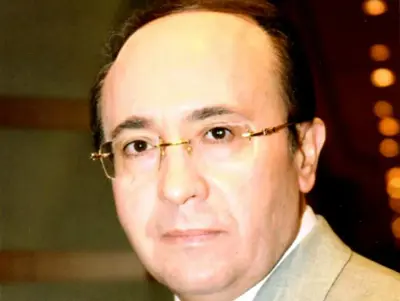
Faisal Al-Qasim, also written as Faisal Al-Kasim is a British-Syrian television personality based in Qatar, who is known for hosting the controversial live debate show The Opposite Direction (Arabic: الاتجاه المعاكس) on Al Jazeera, where two guests with contradicting points of views debate on various topics but mostly topics related to politics of the Arab world. Fights break out on some occasions.
