Victor Hugo Quotes
Whom man kills, him God restoreth to life.
Hugo, Victor. The Man Who Laughs. Translated by Joseph L. Blamire, D. Appleton and Company, 1869.

Most sophisticated Muslim theologians would not agree at all with the “permission” he quotes from the Koran. However, there is no hierarchy of belief in Islam and there are tens of thousands of Muslim imams and millions of individual Muslims who believe and teach just what this particular terrorist stated.


This is a very interesting quotation in that it began as a bogus quotation. Someone made it up and posted it on the internet. Soon it had been picked up by many of the Internet quotation sites which just “scrape” other sites and do no research themselves. Soon it was all over the internet. When he appeared on Meet the Press, Tim Russert asked him about the attribution. He then embraced the quotation as representing his real feelings. In the area of the Internet, this phenomenon has been possible and in this case actually happened.


As a slave holder himself, this was a dramatic statement. Slavery was immoral, God’s justice will not be on the white slave owners side, a slave revolt or other event could occur and change things radically. One great puzzlement of American history has been why Jefferson, who wrote so eloquently against slavery and predicted the disaster that would come. would himself keep his slaves and never free them as George Washington did. Some argue that he was so broke financially, that he could not afford to free them.


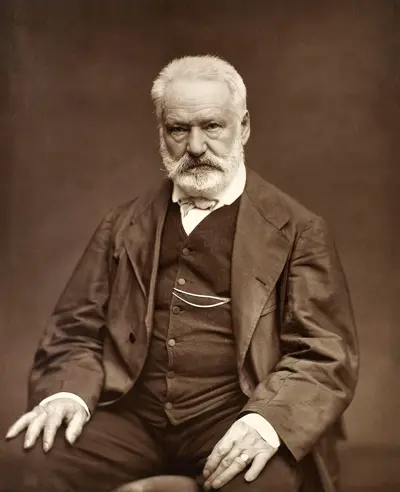
Victor-Marie Hugo was a French poet, novelist, and dramatist of the Romantic movement. During a literary career that spanned more than sixty years, he wrote abundantly in an exceptional variety of genres: lyrics, satires, epics, philosophical poems, epigrams, novels, history, critical essays, political speeches, funeral orations, diaries, letters public and private, as well as dramas in verse and prose.
