Friedrich Nietzsche Quotes
Whom do I hate most, among all the rabble of to-day?' The Socialist who undermines the workingman's instincts, who destroys his satisfaction with his insignificant existence, who makes him envious and teaches him revenge.”
Friedrich Nietzsche, 1844-1900, German Philosopher, The Antichrist
Sourced by: Eigen's Political and Historical Quotations


Sinclair had written an expose of the meat packing industry – the Jungle – which used as its setting the Armour meat packing factory. It changed the way the public thought about the industry, the role of government and regulation. President Roosevelt took up the reform role, and got Congress to Regulate the quality and cleanliness of the meat packing industry. Sinclair, however not only wanted that reform, but also wanted the labor wages and conditions reformed. He referred to the Armour plant as the fortress.


In his economic view, managers, accountants, attorneys, owners, shareholders, landlords, were all supported by the workers who have to support themselves and all the others.


The Cuban dissidents and the CIA had assured President Kennedy and the Joint Chief’s of Staff that as soon as the CIA organized troops landed there would be uprisings throughout Cuba and the invaders would be supported by the Cuban people, happy to overthrow Castro. After the landing, there was not a single uprising nor was there any assistance provided to the invaders who were easily captured by Castro’s men. Castro was very popular. The CIA and Cuban dissidents were guilty of wishful thinking.

She was right in the sense that women’s suffrage was most successful when the women—without regard to socio economic class—were involved, as were men, many of whom were strong feminists. Opposing women’s suffrage has always been many men and a substantial number of women. Making a major change in a society takes all the help and allies on can get. See {637761} for a similar Italian view. In the final analysis, it was the men who had to vote to give women the vote, so feminist men were particularly important.


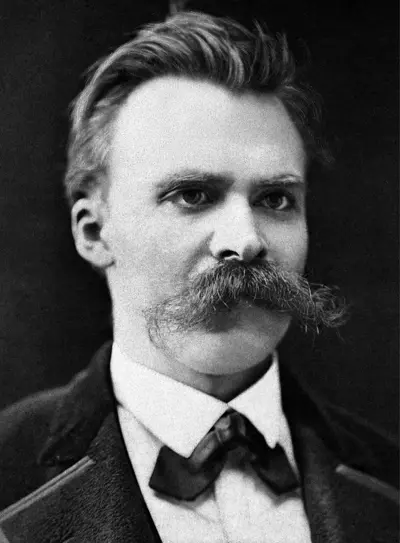
Friedrich Wilhelm Nietzsche was a German philosopher, cultural critic, composer, poet, writer, and philologist whose work has exerted a profound influence on modern intellectual history. He began his career as a classical philologist before turning to philosophy. He became the youngest person ever to hold the Chair of Classical Philology at the University of Basel in 1869 at the age of 24. Nietzsche resigned in 1879 due to health problems that plagued him most of his life; he completed much of his core writing in the following decade. In 1889, at age 44, he suffered a collapse and afterward a complete loss of his mental faculties. He lived his remaining years in the care of his mother until her death in 1897 and then with his sister Elisabeth Förster-Nietzsche. Nietzsche died in 1900.
