Robert Nozick Quotes
Whoever makes something, having bought or contracted for all other held resources used in the process... is entitled to it. The situation is not one of something's getting made, and there being an open question of who is to get it. Things come into the world already attached to people having entitlement over them.
Nozick, Robert. Anarchy, State, and Utopia. Basic Books, 1974, p. 160.


Use included renting it. What he opposed was simply holding land when whites were driving Indians off their lands because all the unused land outside of the reservation was owned by someone and the asking price was very high. Ingersoll was considered to be the greatest orator and political thinker of his day, but his overt atheistic views curtailed his elected political career.


Day was often associated with left wing causes, but she was very hard to classify in traditional political terms. This quotation shows that unlike most communists and many socialists, she was an advocate of private property although she fought for the ability of a larger proportion of the population to have property.


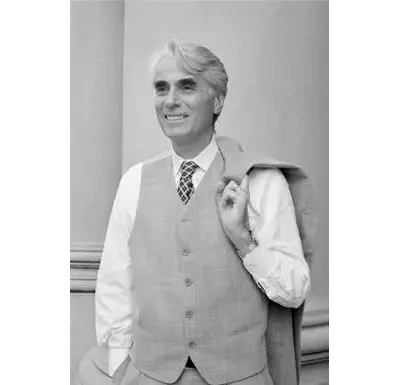
Robert Nozick was an American philosopher. He held the Joseph Pellegrino University Professorship at Harvard University, and was president of the American Philosophical Association. He is best known for his books Philosophical Explanations (1981), which included his counterfactual theory of knowledge, and Anarchy, State, and Utopia (1974), a libertarian answer to John Rawls' A Theory of Justice (1971), in which Nozick also presented his own theory of utopia as one in which people can freely choose the rules of the society they enter into. His other work involved ethics, decision theory, philosophy of mind, metaphysics and epistemology. His final work before his death, Invariances (2001), introduced his theory of evolutionary cosmology, by which he argues invariances, and hence objectivity itself, emerged through evolution across possible worlds.
