Clara Zetkin Quotes
Who will deny that many of the workers, numbers of the peasants, and above all most of the intelligentsia, neither share the views nor endorse the policy of the Bolsheviks? None the less, a very large proportion, if not the majority, of those proletarians and peasants who take an active interest in political matters, support the Bolsheviks, and the same is true of the social revolutionaries of the left.
Zetkin, a Russian Communist supporter, like most other left-wing intellectuals of the day realized that the post-revolutionary Bolshevik activity was brutal and undemocratic and did not approve. Yet most stayed with the Bolsheviks, initially because their previous life under the Czar had been so terrible, and later because dissent and opposition had become so personally dangerous.
Clara Zetkin, 1857-1933, German International Secretary, Tailors and Seamstresses Union, National Executive member of the German Social Democratic Party, Secretary of the International Bureau of Socialist Women, Through Dictatorship to Democracy, 1919
Sourced by: Eigen's Political and Historical Quotations


Vladimir Lenin. Most did not and the Communist government was brutal and murderous in forcing them into the Communist culture, outlook, and behavior. See {640096} for a description of some of the effort.

Comintern was upset by the American Socialist Party because the party had rejected the 21 Conditions for Affiliation and withdrew their intent to join the Third International. To Comintern, the Socialist Party was a party of “bourgeois socialism.”


The Russian domination of Communist parties throughout the world, was opposed very early. In many countries there were major struggles between the pro-Russian communists and the independent communists.

This was the basic document issued after the Russian Revolution establishing the basic legal and economic structure of the new Soviet State.

After the Russian Revolution in 1917, there was a vicious civil war and the Communists governed ruthlessly not even pretending to follow the democratic principles that they had espoused before they can to power. This was a typical intellectual rationalization of a dictatorial behavior that lasted until the fall of Communist Russia. However, at this time most supporters thought that things would soon change. They only got worse culminating in Stalin’s atrocities. The Bolsheviks were the ruling communist party in Russia.

This letter caused the Labor Government of Ramsay MacDonald to lose power to the Conservatives. The Conservatives claimed that the British labor movement was in cahoots with the Russian Communists to use British unions to promote Communism and spread propaganda. In 1924 many Laborites claimed that the letter was a forgery and had been planted by the Conservatives who had pulled other dirty tricks before to smear Labor. However, all the British newspapers ran copies of the letter and Labor lost the election. Historians almost all agree that the letter is a forgery because in other parts of the letter, talking about the Russian program, several errors were made describing the Communist program at the time. Gregory Zinoviev, a high ranking member of the Russian Cominterm, would almost certainly have not made these mistakes. Regardless of the fact that it is a forgery, to this day, it is still referred to as the “Zinoviev Letter,”


Vladimir Lenin. See {640096} and {640094} for more on the Communist struggle with the Russian Peasants.
Vladimir Lenin. Actually, when the peasants resisted collectivization the Russian State did use violence and intimidation. And Stalin later completely ignored this principle and brutalized the peasantry.

This is an example of what made the Cold War so difficult. The Italian Communists had great misgivings about the Russian version of Communism that tended to abuse human rights and try and control other countries. However, when the Russian Communists were under world attacks by the West, as with their incursion into Hungary, he urged that all the Communists stick together and defend the Russians even for policies that they thought wrong. On the West side, the same thing occurred. The United States tolerated and supported a number of terribly oppressive dictatorships that were virulently anti-Communist. Polarization was the international norm.
Vladimir Lenin. The Socialist-Revolutionaries were the less radical rivals of the Bolsheviks after the 1917 Russian Revolution. The Bolsheviks seized power with a coup and then adopted the program of the Socialist-Revolutionaries as a tactic to obtain the loyalty of the peasants, most of whose representatives in the new parliament had been displaced by the Bolshevik coup. The tactic worked. See {640089} for the major element of the policy.

After the 1917 Russian Revolution many of the Western Countries sent troops to Russia where they aided the Whites against the Reds. When the Red Bolsheviks prevailed, there were many attempts to diplomatically and economically undermine the Communist government. This caused a unity among different Russian factions. Sforza urged leaving them alone and letting the Bolsheviks fail by their own ideology. Most Western nations and the United States did not agree with him.


Vladimir Lenin. Early in the Russian Revolution, Trotsky was thought of as the leading and most prestigious member of the revolution while formal positions and constitutions were being developed. Lenin himself thought this reasonable. Later, Stalin would have Trotsky assassinated.

Lev Davidovich Bronstein. The Bolsheviks had all they could do to solidify their revolution and try and manage the basic needs of food and the economy. There was little thinking about foreign policy or Russia’s role in the world at this time.

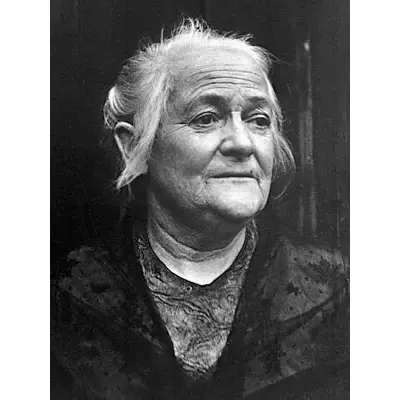
Clara Zetkin was a German Marxist theorist, communist activist, and advocate for women's rights.
