Anton Chekhov Quotes
Who maintains the pubs and makes the peasants drunk? The peasant. Who embezzles the village, school, and parish funds and spends it all on drink? The peasant. Who robs his neighbor, sets fire to his house, and perjures himself in court for a bottle of vodka? The peasant.
This work of Chekov’s was censored heavily by the Russian Communists of the 1920s and 1930s who publicly glorified the Russian peasant. Chekov’s observation, like many of poverty-stricken populations observed the status quo and did not comment on how the state of affairs came to be in the first place.
Anton Chekhov, 1860-1904, Russian Writer, The Peasants
Sourced by: Eigen's Political and Historical Quotations


The great poet was trying to get a job with the BBC and Nicholson was to be his boss.

Samuel Langhorne Clemens, 1835-1910. The Congressmen who voted for Prohibition in the next century had not read or believed this quotation of Twain’s.


When Washington was younger and running for the colonial Virginia assembly, he bought beer and rum for all the voters in his precinct. He did not then realize the damage that alcohol can do. One of the commonalities between Lincoln and Washington were their experience in seeing alcohol cause the death and/or ruination of many. See {630832}.

He was describing the way that the Colonial America, Native American communities coped with the adverse consequence of violence brought about by liquor which had been given to the Indians by white traders for the purpose of impairing the Indians’ judgment so that they would trade more easily and on better terms. Since then and into the 21st century, business people have entertained’ potential customers with alcohol for the same general purposes.


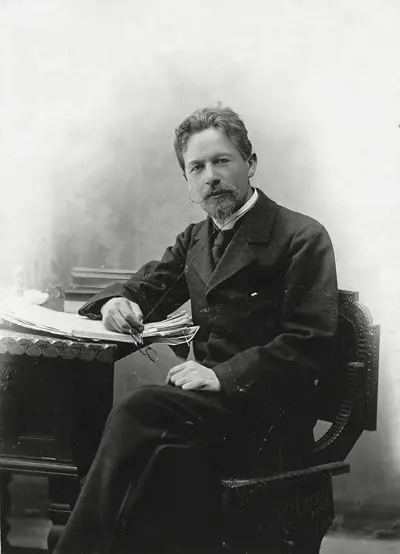
Anton Pavlovich Chekhov was a Russian playwright and short-story writer who is considered to be among the greatest writers of short fiction in history. His career as a playwright produced four classics, and his best short stories are held in high esteem by writers and critics. Along with Henrik Ibsen and August Strindberg, Chekhov is often referred to as one of the three seminal figures in the birth of early modernism in the theatre. Chekhov practiced as a medical doctor throughout most of his literary career: "Medicine is my lawful wife", he once said, "and literature is my mistress."
