Friedrich Nietzsche Quotes
Wherever Germany extends her sway, she ruins culture.
Nietzsche, Friedrich. On the Genealogy of Morals and Ecce Homo. Translated by Walter Kaufmann, Vintage Books, 1967, p. 239.


Even at this early time, it was clear that whites had brought numerous diseases that decimated the Indians. Alcohol and disease killed many more native Americans than all the wars—intertribal and with the whites—ever did. Neolin warned but did not have more than regional influence.

The German designs for Polish destruction began long before World War II. Poland, created by the Treaty of Versailles, was seen be fanatic Germans as an example of French Hegemony.

This statement was widely interpreted to be a statement of Western Christian superiority over the Muslim world.


The poem was written to urge the United States to annex the Philippines.


Lord Gordon, then a young captain, was posted to China where Lord Elgin had ordered the destruction of the beautiful Chinese Summer Palace in retaliation. Critics such as Strachey saw the intellectual contradiction.

The planners of this particular war effort involved many ideologically correct supporters of a neo conservative agenda from the United States and the other Allies more knowledgeable diplomats and military people were kept our of the effort lest they disagree with administration ideology or policy. The result was a very badly mismanaged occupation phase of the war after a very well managed invasion effort.


He goes on to observe that the German’s are the most hated of the Europeans in large part because they mainly trade in rotgut liquor much of it poisoned which has a devastating effect on the Africans. (The English, in contrast had to have all alcohol inspected in London for safety, before it could leave for Africa.) The “kings” to which the Bishop referred are the rural tribal kings of whom there were more than a few. It is not as if there were a unified monarchy. Another interesting observation is that although Turner was one of Americas leading Blacks, he used the term frequently, but never capitalized it.

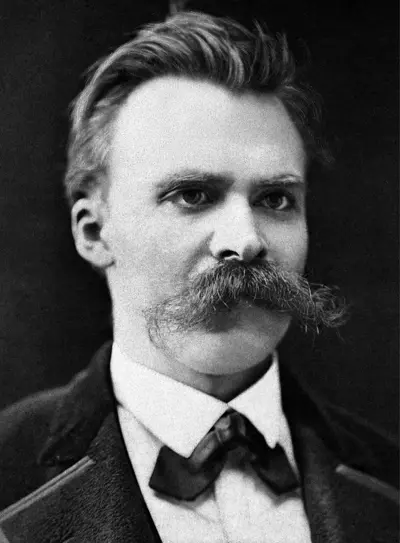
Friedrich Wilhelm Nietzsche was a German philosopher, cultural critic, composer, poet, writer, and philologist whose work has exerted a profound influence on modern intellectual history. He began his career as a classical philologist before turning to philosophy. He became the youngest person ever to hold the Chair of Classical Philology at the University of Basel in 1869 at the age of 24. Nietzsche resigned in 1879 due to health problems that plagued him most of his life; he completed much of his core writing in the following decade. In 1889, at age 44, he suffered a collapse and afterward a complete loss of his mental faculties. He lived his remaining years in the care of his mother until her death in 1897 and then with his sister Elisabeth Förster-Nietzsche. Nietzsche died in 1900.
