Cotton Mather Quotes
Where Schools are not vigorously and Honourable Encouraged, whole Colonies will sink apace; into a Degenerate and Contemptible Condition, and at last become horribly Barbarous
Cotton Mather, 1663-1728, Massachusetts Cleric and Historian, Prognostications upon the Future State of New England
Sourced by: Eigen's Political and Historical Quotations


Most people would assume that he was referring to the Native Americans but to many early Americans Catholics were more heathen than ignorant Indians.


One of the most enduring legal debates is whether the Founding Fathers intended the Constitution to be forever read and interpreted literally and with the values and knowledge of the 18th century or be adapted to the changes that would inevitable occur. Warren was a leading exponent of the latter view.

Lodge was also an excellent historian. He wrote a distinguished biography of George Cabot, his great-grandfather. He followed this with other biographies of Alexander Hamilton in 1882, and of Daniel Webster in 1883. Only two years later he produced in 1885 a monumental nine-volume series of newly edited papers of Hamilton, and then a biography of George Washington—all this before he went into politics.

Ingersoll was considered to be the greatest orator and political thinker of his day, but his overt atheistic views curtailed his elected political career.


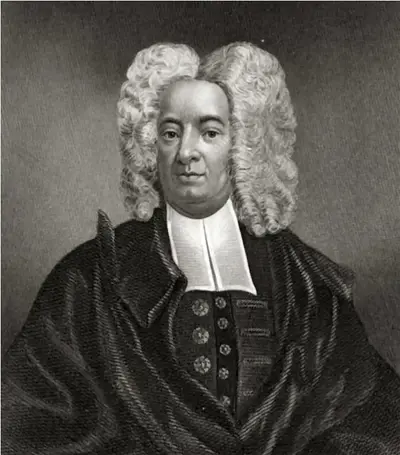
Cotton Mather /ˈmæðər/ FRS was a New England Puritan minister, prolific author, and pamphleteer. One of the most important intellectual figures in English-speaking colonial America, Mather is remembered today chiefly for his Magnalia Christi Americana (1702) and other works of history, for his scientific contributions to plant hybridization and to the promotion of inoculation as a means of preventing smallpox and other infectious diseases, and for his involvement in the events surrounding the Salem witch trials of 1692–3. He also promoted the new Newtonian science in America and sent many scientific reports to the Royal Society of London, which formally elected him as a fellow in 1723. A controversial figure in his own day, he sought unsuccessfully the presidency of Harvard College, which had been held by his father Increase, another important Puritan intellectual.
