William Stoughton Quotes
... bloody and barbarous heathens.
Most people would assume that he was referring to the Native Americans but to many early Americans Catholics were more heathen than ignorant Indians.
William Stoughton, 1631—1701, Colonial magistrate and administrator in the Province of Massachusetts Bay, Protestant Clergyman, Lieutenant Governor of Massachusetts, Chief Justice of the Salem Witch Trials, Description of the French Catholics in America at the time, Quoted in The New York Times, December 20, 2015
Sourced by: Eigen's Political and Historical Quotations

Mather was urging the community to protect their children against the Devil and his band. To exemplify just how terrible Devils were to his audience, he used a comparison to the worst thing the audience was familiar with—Indians. Although there were a few examples in Colonial America of Indians being perceived as benign or even people, they were few and far between, and tended to be in New York and Pennsylvania.


Disraeli was the 1st Earl of Beaconsfield


He thought that the Israeli policy of dealing with Arab terrorism was too weak. His view was that the same kind of terror practiced by some Arab terrorist groups, without regard to the lives of innocent civilians, should be adopted by Israel. His view was that since Israel was accused of terrorism when it had measured, pinpoint targeting of terrorists, especially when there was unintended collateral damage, Israel might as well adopt real terrorism that would be much more effective by having the entire Arab population in fear of their life rather than just being inconvenienced or even humiliated. He violated Israeli law and was even jailed for making terrorism plans.


Througout political history, including in America, opportunistic, unscruplous politicians have appealed to the prejudices and hates of subsets of the population for others (usually minorities) to get elected or obtain support for legislation and administrative action. In America this has been an element of all populist movements—an enemy. This quote is particularly enlightening in that it shows that the real need is to have a minority to focus the public against—which one is not as material as the fact that there is one.


Odo of Chatillon-Sur-Marne. This is an amazingly distressing quotation for most moderns. Here we have the Pope preaching genocide and ethnic cleansing. This was one of the main triggers of the bloody Crusades and is not forgotten by Muslims in the Middle East Today. As Islam has not changed a great deal in 1000 years, most Muslims assume that the same is true of Christianity and especially the popes and the Roman Catholic Church. This is one of the reasons that the Islamic world reacts so strongly when a pope makes any statement negatve about Muslims and Islam.

In September of 2006 Pope Benedict XVI, quoted this statement in a lecture to theological students. There was much distress and protest among Muslim leaders.


Most people are familiar with the people are familiar with the terrible persecution of the Jews in Spain by the Christians. Although there were a few examples of tolerance to Jews by Muslims when they controlled Spain and instances like modern Turkey. Generally however there is and has been Islamic persecution of Jews, Christians, and other non Muslims in almost all nations where Muslims have been in control. Until the Enlightenment, Christian persecution of other religions was just as bad if not worse.
The Barbary Pirates had an incredible extortion racket going in the Mediterranean. If nations would pay them an annual sum each year, they would not attack and seize merchant ships of that country and sell the ships and goods while holding the sailors for ransom.

Many people have believed that the Nazis introduced anti-Semitism into German society and politics. This quotation is one of the very many what show that anti-Semitism was rife in Germany before Hitler ever came to power—back to the Dark Ages. The Nazis recognized it and took advantage of it by ascribing all of Germany’s ills to the Jews, knowing full well that there was underlying public opinion that would make that a good tactic.
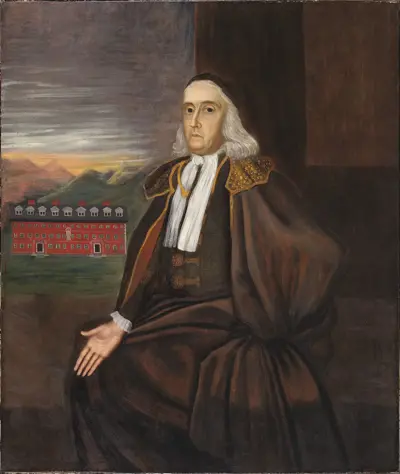
William Stoughton was a colonial magistrate and administrator in the Province of Massachusetts Bay. He was in charge of what have come to be known as the Salem Witch Trials, first as the Chief Justice of the Special Court of Oyer and Terminer in 1692, and then as the Chief Justice of the Superior Court of Judicature in 1693. In these trials he controversially accepted spectral evidence (based on supposed demonic visions). Unlike some of the other magistrates, he never admitted to the possibility that his acceptance of such evidence was in error.
