Lee Iacocca Quotes
When you’re highly leveraged, everything is exaggerated. Good times are better—but bad times are much worse.
Leveraged means that the company is not investing all its own money and has borrowed some or much in a highly leveraged situation. He, and most corporate executives, used to be very wary of corporations being highly leveraged. However towards the end of the 20th century the CEO’s—ironically especially in banks and financial companies who should have known better, tended to get away from this worry, and led their companies to very highly leveraged situations. When the Meltdown of 2008 hit, most were so highly leveraged that they became insolvent very quickly and the Great Recession followed.
Lee Iacocca, CEO Chrysler, President, Ford Motor Company, Autobiography, 1984
Sourced by: Eigen's Political and Historical Quotations


U. S. Treasury Secretary Larry Summers called Rajan a “Luddite” for this view, but what Rajan observed and predicted was exactly what happened in the Meltdown of 2008 which led to the Great Recession. Rajan was one of the few economists to call this right. Several, invested their own money assuming a crash and made billions. Most, like Summers and the Federal Reserve Chairmen in retrospect admitted that they missed the signs and didn’t connect the dots. See {637168}, {637987}, and {620038}

Born thought that her agency was responsible for regulating the new esoteric financial products—derivatives including credit default swaps—for otherwise there would be no regulation at all of financial products that could dwarf the stock and bond market. Summers persuaded her to back off. When the Meltdown of 2008 hit, the huge derivative exposure of the large banks and some insurance companies was so great that it was one of the major causes for the meltdown of the entire banking system. Summers, normally a great economist not only called this one wrong, but later, along with most other government and private economists ignored a very explicit warning—See {637168}, {637986}, and {620038}.


Credit default swaps were in large part responsible for the melt down of the economy of 2008 and the Great Recession thereafter. A credit default swap was one of the favorite derivatives that became popular. Is an insurance policy that a company will pay off its bonds and not go bankrupt. It is a cross between an insurance mechanism and a stock exchange type security mechanism, and through heavy lobbying, escaped any kind of regulation. It cost a company no money to write a credit default swap, and they were paid to do so. As long as business and the economy was good, it was a terrific business but there was no way of ever knowing how much risk they were taking. So companies who wrote credit default swaps did not have to have the money to pay to back them up. When that happened in 2008, even the largest insurance company in the world collapsed because of the risk of having to pay the credit default swap and the U. S. Government had to take over the insurance company. In 2010, the Obama administration passed a financial reform bill that began to regulate credit default swaps. Buffet, the American who had made the most money in financial securities, realized the great danger not only to the company, but to the entire national economy. Most of the rest of the financial institutions, could make large amounts of money without have to have much capital as long as things went well. So credit default swaps began to exceed the other financial instruments in activity. Neither the Federal Reserve or the other government regulatory agencies chose to regulate these risky instruments nor even to require that they be publicly disclosed -- See {637987}, {637986} and {637992}.


The Meltdown of 2008 and Great Recession that it caused

Actually, even with higher capital requirements, the banks could take more risk but then they would have to risk their own money rather than their depositors’ funds. The depositors funds are at risk but if the risk pays off, only the bank and their executives profit. The depositors get nothing. If the bank loses their risky gamble, the major loss will be covered by the Government via a bail out and/or Federal Deposit Insurance money that protects most depositors. For the Banks, its “heads we win; tails the government loses”.


Despite this warning, and the hundreds of billions of dollars of people’s money that was lost on derivatives, and recommendations for not allowing derivatives to bought or sold by institutions who invest the public’s money, derivatives were not outlawed by Congress in its efforts to reregulate the financial industry.
The Meltdown of 2008 came a year later and Citigroup, one of the largest banks in America, had massive liquidity problems and in order to stave off bankruptcy the taxpayers had to come up with $45 Billion. The bank executives, as this quotation demonstrates, knew that they were in a very risky situation and that if the subprime mortgages started to default, the “music would stop” and they and the other banks would have a massive liquidity problem. None the less, they kept on investing more and more of their bank customer’s money and making money in what they knew was a highly risky enterprise. The greed clouded their judgment and when the music stopped and many were no longer dancing, the Meltdown of 2008 almost destroyed the entire national economy and triggered the Great Recession where the overwhelming proportion of Americans had to suffer for the greed of those who could not “stop dancing” even as they knew it was very dangerous.

This warning was a decade before the Meltdown of 2008, but was not heeded by any of the politicians. As a result a number of the companies that made all those risky decisions assumed that if something went terribly wrong the government would not let them fail. Unfortunately, they were right and the taxpayers spent billions to prevent companies from failing. After the meltdown all the politicians vowed to end the too big to fail concept, but while some improvements were made, the Congress could not come to agreement, and the markets and a number of companies think that they are still too big to fail. This is particularly true for Defense Contractors where the government has and probably will in the future, protect irresponsible companies from failure if they are the only company that makes needed weapons and other equipment.


Trump as a business man was notorious for setting up business deals where his partners would put up the money. If the enterprise failed the partners were at risk and lost their money while either did not or lost very little. If money was made, however, he took a large share. He not only did this many times but actually admitted it and bragged about his ability to do that. Incredibly enough he even extended this technique to his charity giving. The vast majority of the money he did good things with through his foundation came from other people. There were many years where he gave not a penny to his own foundation, but gave away and took the credit for what was done with other people’s money. The recipients of the foundations grants mostly assumed that Trump was being generous with his own money, and he never disabused them.
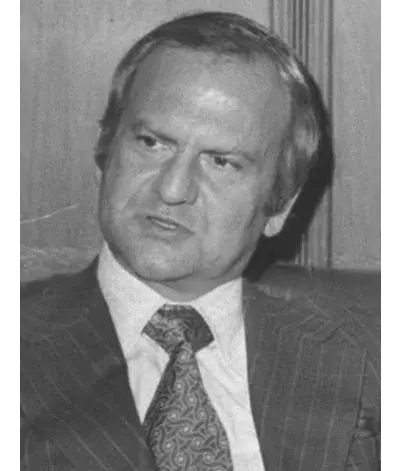
Lido Anthony "Lee" Iacocca was an American automobile executive best known for the development of the Ford Mustang and Ford Pinto cars while at the Ford Motor Company in the 1960s, and for reviving the Chrysler Corporation as its CEO during the 1980s. He was president and CEO of Chrysler from 1978 and chairman from 1979, until his retirement at the end of 1992. He was one of the few executives to preside over the operations of two of the Big Three automakers.
