Wynton Marsalis Quotes
When you study our greatest artists, you will find that they give us a key to understand how to deal with each other, and that our bloodlines are intertwined. It's not hyphenated America. That there is an America, and it is expressed in those arts. It gives us a key to figure out how to negotiate with each other, and it tells us actually who we are.
Marsalis, Wynton. Interview. Big Think, 2012.


At the time racism and discrimination in the United States was not only rampant but legal. But change in many substrata of America was detectable and many intellectuals--writers, artists, scientists, educators, theologians, entertainers, groups who would later be called “elites” began to make themselves heard on the subject. Falkner was one whose novels had always taken an anti racist view point and now were overtly calling for political and social change.

Note the belief that the author has the belief that over time homogeneity is important in a state, whereas the most successful modern states have been ones that are diverse—i.e. America, Britain, China, France. There have been some small successful states like Norway that are homogeneous, but large states need the heterogeneity.

Savarkar was a fascist-oriented, Hindu nationalist, who advocated a quasi Hindu theocracy and the relegation of Muslims to second class citizen status. See {641952}.


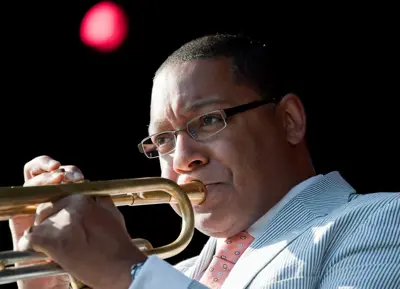
Wynton Learson Marsalis is an American trumpeter, composer, teacher, and artistic director of Jazz at Lincoln Center. He has promoted classical and jazz music, often to young audiences. Marsalis has won at least nine Grammy Awards, and his Blood on the Fields was the first jazz composition to win the Pulitzer Prize for Music. He is the only musician to win a Grammy Award in jazz and classical during the same year.
