Douglas Coupland Quotes
Americans are a quarter of a billion people who have almost nothing in common except for the fact they've been told they have lots in common.
Coupland, Douglas. Polaroids from the Dead. HarperCollins, 1996.

The first Native American to become a General Officer. Appointed by President Grant in 1869. When Lee arrived there were many Black troops and he mistook General Parker for a Negro but then apologized saying that “I am glad to see one real American here.” This was Parker’s reply.

His belief is that the vast majority of Americans have a set of values in common including tolerance of alternative religions. In this sense, he considers the common values as an American Religion.


At the time, there was very little national news in most newspapers and almost none about local areas and peoples other than the newspaper’s town. With the exception of New York and a few other cities, there was no news on the radio and TV had not yet been deployed. Most of the nation was very insular. It would not be until the Eisenhower administration that the national highway system was built. Most American spent their entire lives within 90 miles of their home and knew little about anywhere else other than NY, Chicago, Hollywood, Washington, and San Francisco.


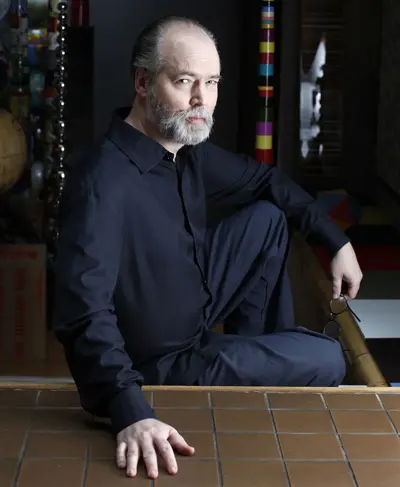
Douglas Coupland OC OBC (born 1961) is a Canadian novelist and artist. His fiction is complemented by recognized works in design and visual art arising from his early formal training. His first novel, the 1991 international bestseller Generation X: Tales for an Accelerated Culture, popularized the term such as McJob. He has published thirteen novels, two collections of short stories, seven non-fiction books, and a number of dramatic works and screenplays for film and television. He is a columnist for Financial Times. He is also a frequent contributor to The New York Times, e-flux journal, Dis, and Vice. His art exhibits include Everywhere Is Anywhere Is Anything Is Everything which was exhibited at the Vancouver Art Gallery, and the Royal Ontario Museum and the Museum of Contemporary Canadian Art, (now the Museum of Contemporary Art Toronto) and Bit Rot at Rotterdam's Witte de With Center for Contemporary Art and the Villa Stuck.
