Elizabeth Warren Quotes
When you have a tilted process, you will have a tilted outcome.
She was referring to an International Trade Agreement which is being negotiated with 500 different Americans working on and drafting different components of the agreements. However, 85 percent of the Americans working on the agreement were executives of large multinational corporations of lobbyists for corporations. There were very few workers or representatives of labor organizations or consumer organizations involved with the process. The result she believed would be an agreement tilted toward the interests of the large corporations and the concerns of workers and consumers would be sublimated in the process.
Elizabeth Warren, U. S. Senator (Democrat, MA), Interview, PBS Evening News, May 13, 2015
Sourced by: Eigen's Political and Historical Quotations


The right of English merchants had been attained earlier when Ivan IV, the Terrible, was Czar. However the Czar35266s were so autocratic that one might or might not live up to agreements made by their predecessors. So Queen Elisabeth's diplomats had to repeatedly negotiate free trade agreements with Russian Czars.

The president was explaining the importance of the Trans-Pacific Partnership (TPP) which his administration had successfully negotiated with most Pacific Nations but had run into significant opposition in the United States, where trade pacts in general were being blamed by many Americans—–including politicians—–for the low wages and not enough jobs for many middle and lower class workers who did not experience quality education in science, technology, engineering and mathematics or a few other areas that www in great demand.


In his economic view, managers, accountants, attorneys, owners, shareholders, landlords, were all supported by the workers who have to support themselves and all the others.


The TPP was the first Trade Agreement that had ever been classified as “Secret” when it was being negotiated. This was one of the most hotly debated policies of the era. Even Congress could not get a look at what was being negotiated although the Senate would have to ratify it when finished for it to become effective. .On the surface, it is outrageous that a non-military or defense activity should be secret in a democracy. What could be wrong with the Congress and the public being aware of a trade negotiation while it was being formulated and negotiated? Kirk and other apologists for the secrecy policy argue that because of the trade-off relationships among different clauses and facets of a trade treaty, there are many proposals that are made just to initiate a bargaining position, and the negotiators themselves neither expect nor intend those proposals to be a part of the final treaty. To then have groups of Americans get upset and start a lobbying position against a treaty when what they object to is not ever going to be in the treaty poisons in the public mind the entire treaty which then could be killed for something that was never real to begin with. A similar thing happened with the Obamacare legislation. Congress drafted the various clauses and many were included as part of the bargaining process or misunderstood because of poor first drafting. Opposition to those clauses set a tone of animosity against the bill as a whole. After the bill was passed, the clauses that were most unpopular or misinterpreted were the main reason that citizens gave for opposing Obamacare even though they were not in the legislation. Advocates of secrecy point out that the original Constitutional Convention was entirely secret with all the delegates agreeing that if each and every proposal that was debated were public, there would develop so much opposition that the result could never be ratified later. Yet it is hard to argue against transparency of government processes in a democracy.


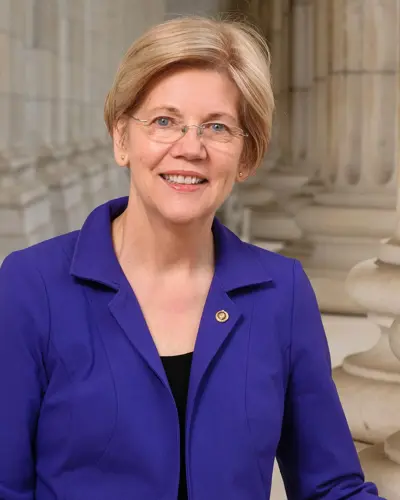
Elizabeth Ann Warren is an American politician and former law professor who is the senior United States senator from Massachusetts, serving since 2013. A member of the Democratic Party and regarded as a progressive, Warren has focused on consumer protection, economic opportunity, and the social safety net while in the Senate. Warren was a candidate in the 2020 Democratic Party presidential primaries, ultimately finishing third.
