Dorothy Day Quotes
When it comes to labor and politics, I am inclined to be sympathetic
to the left, but when it comes to the Catholic Church, then I am far to
the right.
Miller, William D. Dorothy Day: A Biography. Harper & Row, 1982, p. 150.

So far as he was concerned, Republican moderates—his own party members—were liberals. Anyone who did not support the extreme Conservative agenda, was an enemy and a liberal. He and the Tea Party drove almost all the moderate Republicans out of the party.


While this was his opinion, it was never issued in a Papal Bull or had the force of Catholic law. Meanwhile, almost all of the socialist movements in the West have had Catholics in their leadership and many democrats of modern times would have been considered socialist. Many countries with high proportions of Catholic voters have elected socialist governments in secluding Spain and Italy.


He was the last Pope to hold temporal power. This was an oft repeated view.

Sorenson was hired for the future president.

The Priest was the right wing demagogic radio host of his day. Virulently anti-Semitic and anti-Black, he was threatened with excommunication by the Catholic Church, which finally ordered him to cease us weekly radio show and stop the political hate.


Actually, there have been “paranoid” fear of opposition political viewpoints in America very often. In the early days of the Republic, the Federalists main concern was not England or other foreign enemies, but Jefferson’s Democratic Republicans. And those Jeffersonians were absolutely convinced that the greatest danger to America was the Federalists who would bring back a monarchy if they could. The Jacksonians triggered a similar polarization. The Civil War stemmed from this extreme. Even America’s most popular President, Franklin Delano Roosevelt, who was elected to 4 successive terms, was perceived as the major “enemy” of America along with his wife Eleanor and the other New Dealers.


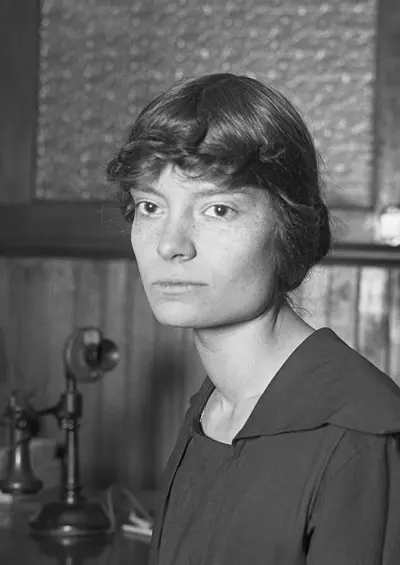
Dorothy Day was an American journalist, social activist and anarchist who, after a bohemian youth, became a Catholic Christian without abandoning her social and anarchist activism. She was perhaps the best-known political radical in the American Catholic Church.
