Victor Hugo Quotes
When God desires to destroy a thing, he entrusts its destruction to the thing itself. Every bad institution of this world ends by suicide.
Hugo, Victor. The History of a Crime. Translated by T. H. Joyce and Arthur Locker, Harper & Brothers, 1878.


Essentially such a rigid conviction of unbelievers was common with both Protestants and Catholics in the middle of the second millennium, but Christian theology evolved and forgiveness and repentance became major factors. Islam did not so modernize so even in the 21st century a disbeliever deserved nothing from Muslims because Allah would never forgive them and they would be consigned to hell. So this Sura and {584363} made fundamentalist Muslim terrorists particularly willing to kill non-believers.
This sura is interpreted by some Islamic fundamentalists as absolution for the killing of a non-Muslim by a Muslim. It was Allah who did it. In a greater sense, critics of Islam observe that many Muslims and Islamic nations have a double standard of responsibility for crimes. If the victims are Muslims, the normal standards of morality hold; but if a non-believer there can be no crime. Terrorism, torture, beheading, mass murder can all be done with a clean conscience if a Muslim takes this interpretation of this sura. Many Muslims however take an opposite point of view. These people do not have the concept of fatalism and lack of free will that others believe. There is a parallel to this problem in Judeo Christian countries although it is less common statistically. But the murder of physicians who perform abortions, and the Jewish radical fundamentalist who killed innocent Arabs at worship are examples of people who viewed themselves as instruments of God in their heinous activities.

This Biblical quotation has been used for more than a thousand years by Christian authorities, civil and religious, to induce obedience to the existing authority and suppress revolution.

What makes this quotation very notable is the fact that Dr. El-Naggar is not even a cleric but a scientist. and yet in spite of his education, much broader than most Muslim men, he still thinks of the Koran as the only source of truth available to man. Observation, deduction, induction, experimentation all have no weight. Herein lies one basic difference between Islamic Fundamentalists on the one hand and Christian, Jewish, Hindu & Buddhist and other religion’s fundamentalists. All may accept their holy book as the revealed truth, but it is only the fundamentalist Muslim who believes that it is the ONLY source of truth and wisdom. A classic difference between the radical fundamentalist and the moderates is that moderates, like almost all religious people on earth, believe that there are other sources of knowledge, truth and wisdom besides their holy book.

This document was issued in the form of what today would be called a press release or a white paper. Altmark was the Lutheran seat of intellectuality and this document was part of a major Lutheran initiative to propagandize against the rising science of astronomy. The Catholics did the same and both religions saw astronomy as an enemy and evil. See {612384}


Oman was one of the first kingdoms to embrace Islam, albeit under the coercion described in this quotation.
Fundamentalist Christians and Jews believe that the Bible is the revealed word of God. In Islam, not only is the same position taken, but it is specifically forbidden to even think about or have a personal opinion about a matter which appears in the Koran—decided by Allah and revealed to the Prophet Muhammed.


Although oft quoted, what Adams actually wrote in a letter to John Taylor (15 April 1814) was: “Remember, democracy never lasts long. It soon wastes, exhausts, and murders itself. There never was a democracy that did not commit suicide.” See related quote for citation.


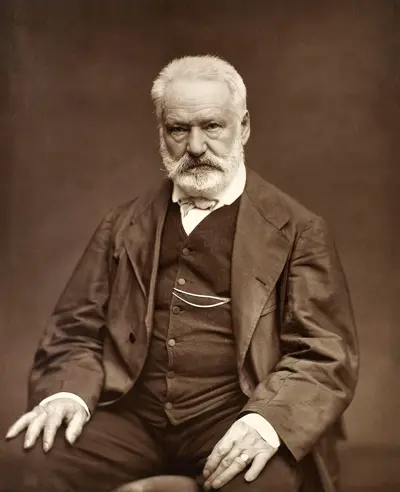
Victor-Marie Hugo was a French poet, novelist, and dramatist of the Romantic movement. During a literary career that spanned more than sixty years, he wrote abundantly in an exceptional variety of genres: lyrics, satires, epics, philosophical poems, epigrams, novels, history, critical essays, political speeches, funeral orations, diaries, letters public and private, as well as dramas in verse and prose.
