Napoleon Bonaparte Quotes
When defending itself against another country, a nation never lacks men, but too often, soldiers.
Bonaparte, Napoleon. Political Aphorisms, Moral and Philosophical Thoughts of the Emperor Napoleon. Edited by G. de Liancourt, T.C. Newby, 1848.


Greek invaders were marching on Istanbul


The French and English, with larger numbers and more experienced troops and officers, wanted the American units to come under the command or their officers and be integrated into the allied army. However Wilson established the tradition that American troops fighting abroad most always fight as an American Army under American Command. Although resented then and into the 21st century by America’s allies who are expected to fight under American command, it is a tradition that no American major politician has seriously challenged since then.


In 1878 there was tension between England and Russia. Some in England were militant advocates of war. This song was extremely popular among them. As a result, they became known as Jingoes or Jingoists. The song became popular in America at the approach of the Spanish-American War and jingoism became part of the American political vocabulary.

Rumsfeld wanted Defense Department people running and controlling the civilian government of Iraq after our invasion. General Garner, who was the American appointee to run the civilian government until the Iraqis could have elections wanted State Department, Justice Department and other non military personnel run Iraq.

At that time there were extensive meetings and discussions for the creation of what was to be the United Nations. The negative view of the United Nations or other international security organization is now and always has been held by a vocal minority in the United States.
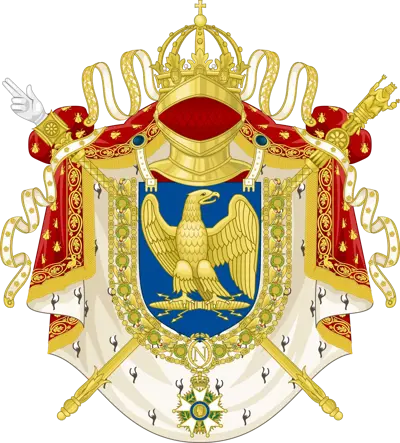
Napoléon Bonaparte was a French military and political leader of Corsican descent. He rose to prominence during the French Revolution and led several successful campaigns during the Revolutionary Wars. As Napoleon I, he was Emperor of the French from 1804 until 1814, and again in 1815. Napoleon dominated European and global affairs for more than a decade while leading France against a series of coalitions in the Napoleonic Wars. He won most of these wars and the vast majority of his battles, building a large empire that ruled over continental Europe before its final collapse in 1815. One of the greatest commanders in history, his wars and campaigns are studied at military schools worldwide. He remains one of the most celebrated and controversial political figures in human history.
