Leon Panetta Quotes
The United States has to have the capability to deal with more than one enemy at one time and be able to confront them and win.
Panetta, Leon. "Defense Strategic Guidance Briefing." U.S. Department of Defense, 5 Jan. 2012.


Washington, although the presiding officer of the Constitutional Convention, said almost nothing for such was the respect for him that he cou;d sway almost any issue. But the absurdity of limiting the size of the American Army was too much for him, and his clever way of phrasing his concern ended discussion of that idea without any ill feelings.

Much of the Chinese military had been distracted from military readiness in favor of political, economic, and ceremonial, activity along with extensive economic corruption. The People’s Liberation Army is a major political force in China which made this a very noteworthy chastisement. Leading Generals were with him however. See {632518}.


3 years later he led America on a huge invasion and nation building project in Iraq. It turned out that had he listened to his own advice and not flip-flopped, the huge cost of the Iraq War might have been avoided.

If a military loses a war, it has shown to be insufficient quality; if it wins, the evaluation is good. With all the talk about what makes for an effective and quality military, as the General states, it is war that is the final arbitrator. So ideally we never want to really know how good our military is.


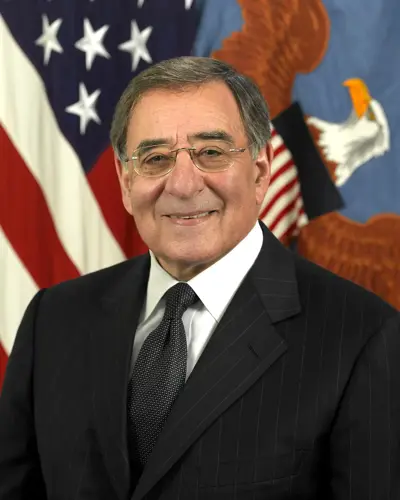
Leon Edward Panetta is an American politician who has served in several different public office positions, including the Secretary of Defense, Director of the CIA, White House Chief of Staff, Director of the Office of Management and Budget, and as a U.S. Representative from California. A Democrat, Panetta was a member of the United States House of Representatives from 1977 to 1993, served as Director of the Office of Management and Budget from 1993 to 1994, and as President Bill Clinton's Chief of Staff from 1994 to 1997. He co-founded the Panetta Institute for Public Policy and served as a Distinguished Scholar to Chancellor Charles B. Reed of the California State University System and as a professor of public policy at Santa Clara University.
