Vine Deloria Jr. Quotes
When asked by an anthropologist what the Indians called America before the white man came, an Indian said simply, 'Ours.'
Deloria, Vine. We Talk, You Listen: New Tribes, New Turf. Macmillan, 1970.


The line, like many in good poetry, has several levels of meaning. The most obvious is that we had explored and conquered the land, before we became a nation.


before there were railroads in the West

Some Mexicans have always resented the U. S. for “colonizing” Arizona and other territory that once belonged to Mexico. This quotation is very revealing concerning the reality on the ground. The Apache were on the land when the Mexicans moved in to “civilize” the territory. However, the Apache, by violence, drove the Mexicans out. At that point the Mexicans were happy to sell Arizona to the Americans and the Gadsden Purchase brought Arizona to the United States as a territory. The Americans however didn’t buy the land from the Apache, the owners before the Mexicans claimed it. Many Apaches continued the violence against whoever tried to settle in the area. Eventually, the Americans accomplished what the Mexicans did not—militarily subduing the Apache.


His specialty was early American history. The early colonists believed that the Indians in America were descended from the lost tribe of the Jews. Therefore, they saw it as their duty to educate them and bring them into the Christian fold, as they had never yet had the chance. Harvard in its earliest days had what and Indian students. King Phillip’s War with some Indians had soured the views of many whites and soon Harvard adopted an all white policy.

This quotation is often used as the greatest evidence the white usurpation of Indian land and the dubious value of all the treaties that had been made with the Indians guaranteeing them specific lands. Jackson, however, was not completely accurate. The Iroquois who fought on the American side in the Revolution were still on their lands in New York State. However, the Iriquois had their dealings with the State and local governments, and fared better than those tribes that depended in the Federal Government—especially with racists like Jackson in the Presidency.

Brant had an English style Missionary education and was an Anglican, belonging to the Church of England. During the American Revolution, he persuaded most of the Iroquois tribes to fight for the British against the revolutionary colonists. However, the Oneida tribe was not persuaded and joined the rebel side. A few New England Presbyterian missionaries had targeted the Oneida people, and when that tribe chose the “wrong” side, Brant believed that the reason was their different religious point of view. After the Revolution, Brant and his Iroquois followers were driven out of their American lands and escaped to Canada, while the Oneida were given complete title to their lands by George Washington.


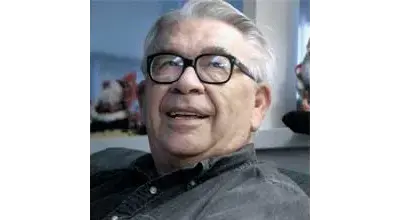
Vine Victor Deloria Jr. was an author, theologian, historian, and activist. He was widely known for his book Custer Died for Your Sins: An Indian Manifesto (1969), which helped attract national attention to Native American issues in the same year as the Alcatraz-Red Power Movement. From 1964 to 1967, he served as executive director of the National Congress of American Indians, increasing tribal membership from 19 to 156. Beginning in 1977, he was a board member of the National Museum of the American Indian, which now has buildings in both New York City and in Washington, DC, on the Mall.
