William Maxwell Evarts Quotes
The pious ones of Plymouth, who, reaching the Rock, first fell upon their knees and then upon the aborigines.
William Maxwell Evarts, 1818-1901, U.S. Attorney General, U.S. Secretary of State, U.S. Senator (Republican, NY), Attributed
Sourced by: Eigen's Political and Historical Quotations


This quotation is often used as the greatest evidence the white usurpation of Indian land and the dubious value of all the treaties that had been made with the Indians guaranteeing them specific lands. Jackson, however, was not completely accurate. The Iroquois who fought on the American side in the Revolution were still on their lands in New York State. However, the Iriquois had their dealings with the State and local governments, and fared better than those tribes that depended in the Federal Government—especially with racists like Jackson in the Presidency.

Miller was the first Black American admitted to a Graduate Program—Johns Hopkins—in Mathematics


He reversed the Spanish policy of keeping guns from the American Indians. He provided arms with the express intention that they destroy each other. This policy almost worked for the Indians of California but several Indian tribes were exterminated.


First Published American Indian Author

His specialty was early American history. The early colonists believed that the Indians in America were descended from the lost tribe of the Jews. Therefore, they saw it as their duty to educate them and bring them into the Christian fold, as they had never yet had the chance. Harvard in its earliest days had what and Indian students. King Phillip’s War with some Indians had soured the views of many whites and soon Harvard adopted an all white policy.
In March of 1814 Jackson led a force to track down the Red Sticks. When they did so at Horseshoe Bend. Jackson made a frontal assault on the Red Stick Breastworks which might have gone badly had not a cotangent of Cherokee Indians—also concerned about the Red Sticks attack on their settlements, assaulted the Red Sticks from the rear. The Red Sticks, caught between the two uncoordinated attackers, lost over 900 men and the battle which then decided the war. In this Battle, Junaluska, a Cherokee, saved Jackson’s life. Years later he would not differentiate between the different Indian peoples and contrary to a Supreme Court order, forced the Cherokee from their settled farms and ranches and moved them to the Oklahoma Territory.

See {633119} for the basic provision of the Dawes Act.

Wayne played so many parts depicting whites in the process of expanding Westward that many people saw him as an expert on the history of the Westward Expansion. He did not comment on the whites who then kept huge ranches “selfishly” for themselves or those who selfishly would not share the mineral rich land that they had taken with anyone including the original Indian owners. So in this view, the Indians should have not been capitalists but they should have been socialists and shared their resources.


This is a very interesting quotation because it shows that the South American Indians were not only the victims of Spanish colonialism, but before Europeans ever set foot in the New World, expansionism, conquest and colonialism was alive and well. It was just that one Indian people imposed it on others. Note also the techniques of sending colonists to the new colonies to “civilize” the conquered peoples. Although this was common in Western History (even Alexander the Great used it, it was independently created as a colonial technique in the New World. The most extensive use of this technique was used by the Russians as that expanded to the Soviet Union the consequences of which we see in ethnic strife in the Balkans and the Ukraine even into the 21st century. Often these colonists were used as spies as well, in Peru {641657} as in all the Western examples.


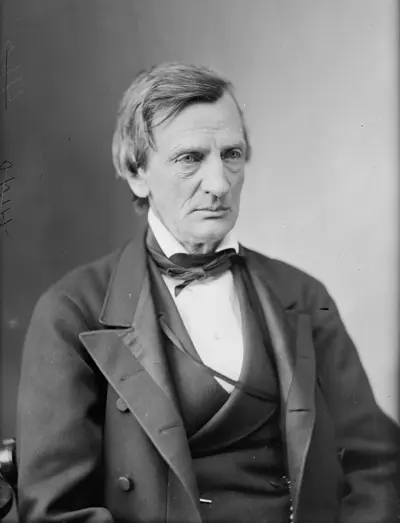
William Maxwell Evarts was an American lawyer and statesman from New York who served as U.S. Secretary of State, U.S. Attorney General and U.S. Senator from New York. He was renowned for his skills as a litigator and was involved in three of the most important causes of American political jurisprudence in his day: the impeachment of a president, the Geneva arbitration and the contests before the electoral commission to settle the presidential election of 1876.
