John Stuart Mill Quotes
When a few free states, separately insufficient for their own defense, are hemmed in on all sides by military or feudal monarchs, who hate and despise freedom even in a neighbor, those states have no chance for preserving liberty and its blessings but by a federal union.
John Stuart Mill, 1806-1873, Member of Parliament, British Political Economist, Representative Government, 1861
Sourced by: Eigen's Political and Historical Quotations


Chile with help from San Martin had ejected the Spanish. O’Higgins, the Chilean leader had joined up with San Martin and served under his command. The sectional rivalry bothered men like Carrera. Instead of seeing all the South Americans fighting the Spanish as allies as O’Higgins did, Carrera and his brothers refused to join a government of unity and they and their troops were just as dictatorial and cruel as the Spanish had been. O’Higgins gave Indians and Blacks equal rights with whites which distressed the aristocratic Carrera’s. Finally the Carrera’s tried to set up their own government, and the new Chilean government disarmed their militia and executed two of the three Carrera brothers who were leading the militia troops who were little more than thieves and brigands.

Iturbide, known also as Agustin I, was the first Emperor of Mexico who was executed by a firing squad.


The organization sent 2,100 volunteers to fight for South American independence from Spain.


This resolution of independence was voted upon a month before the Declaration of Independence. It was approved by 12 of the colonies but not by New York. The Congress appointed a committee to draft what became the Declaration of Independence and that was approved by all the colonies. The resolution was introduced by Richard Henry Lee on instructions from Virginia. The graphic is of Lee’s original notes.


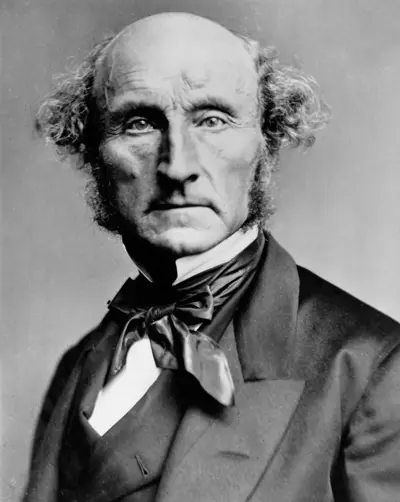
John Stuart Mill, usually cited as J. S. Mill, was an English philosopher, political economist, Member of Parliament, and civil servant. One of the most influential thinkers in the history of classical liberalism, he contributed widely to social theory, political theory, and political economy. Dubbed "the most influential English-speaking philosopher of the nineteenth century", he conceived of liberty as justifying the freedom of the individual in opposition to unlimited state and social control.
