Maryland Quotes
Whatsoever free-born woman shall intermarry with any slave, shall serve the master of such slave during the life of her husband; all the issues [children] of such free-born women, so married, shall be slaves as their fathers were.
Maryland Law, 1661
Sourced by: Eigen's Political and Historical Quotations

Miscegenation was very common between Blacks and whites throughout American history. Even though it was a taboo subject in “polite society” white women marrying or cohabiting with Negro men was so common in Colonial America that the State of Maryland had to pass a law making the children slaves to further discourage the white women. This violated the long held tradition that the slave status of children followed the status of the mothers. The law backfired as Maryland colonists encouraged their white female indentured servants to interbreed with Black slaves so that the children would also become their property as slaves as even slave children were very valuable. The law was then repealed after only 20 years.


This quotation illustrates the Catch 22 dilemma that faces a minority. Black slaves were not allowed to marry and have formal families. After the Civil War racists warned against Blacks who had no respect for marriage monogamy end civil family life. See {619099} But when the slaves were freed and the ex slaves attempted to formalize and solemnize their marriages, they were castigated for that – acting like white people.

This was passed after the Civil War had ended---during Reconstruction. Many states had similar laws until the Supreme Court challenges to them in the latter half of the 20th century.

For anyone in government not to take a stand against intermarriage was almost unthinkable, but when the First Lady did so, it became a national scandal, especially in the South. See {625628} for one reaction.


There was a huge amount of racial interbreeding during the early slavery times of America. Some was consensual as people will be people, but much was the rape of Black slaves my white masters—a concept that was never considered rape by law as one cannot commit a crime against one’s own property. The result after time was every possible combination of white/black mixture. There were names for many of the combinations: Quadroons were one fourth Negro. Octaroons, one-eighth. During and after reconstruction, for purposes of discriminatory law, who was a Negro? The Louisiana “one drop rule” said that if there was ANY trace of Negro ancestry, that person was a Negro and would be discriminated against. Of course, what would happen was that many mixed race children were light skinned and looked white and many were black and all shades in between. It was relatively easy for the lighter skinned “one drop” Negroes to pass as white especially if the left the state. But if anyone accused them of being Negro, they would have been guilty of committing crimes. Some in modern times have little comprehension of how the white plantation slave owners and other whitrd could condemn their own children to a second class life of vicious discrimination, but that is exactly what they did. The great irony here lies with the modern KKK, Nazi, and other White Supremacy Groups. They still hold to the “one drip rule for their viciousness. However, under the one drop rule, almost all of them would be Negroes if they went back far enough, and ALL ARE BLACK under the one drop rule as with modern DNA and genetic analysis, we now know that every human alive today emanated from a Black woman in Africa.


See {642028} & {642029} for another quotation relating to this terrible abuse.

The sexual exploitation of female slaves by the slave owner and/or his relatives was a phenomenon about which most Southerners were in denial. Light skinned and even white babies, born to Negro slaves was fairly common. The gross immorality was so great that it was too painful for most Southerners – especially white females to even contemplate much less discuss. At the same time, the abolitionists had to be very careful that to raise this problem as delicately as possible lest the lost their audience with such gross and indelicate behavior. This quotation was particularly artfully phrased.
John Sutter was an immigrant to California from Switzerland where he became a Mexican citizen. Slavery was outlawed in Mexico and its territories, yet Sutter and others maintained Indians as slaves. The Roman Catholic Missions of California also kept Indian slaves. This quotation is historically important because many people never realized that slavery was prevalent in California.


In the Jim Crow era and well into the 20th century, many school books and historians, wanting to minimize the enmity between North and South, tended to a historical revisionism where the real brutal and immoral edge of slavery was minimized and slave owners were depicted as being in error by modern standards but well-meaning and paternalistic. Foner, with this famous quotation, put the lie to the false image of paternalistic slavery. By the beginning of the 21st century, there were very few serious historians who still tried to characterize slavery in the South as “paternalistic” otherwise humane. See {584014} for another of Foner’s famous quotes regarding slavery
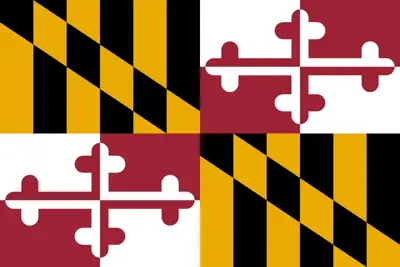
Maryland (US: /ˈmɛrələnd/ (listen) MERR-ə-lənd) is a state in the Mid-Atlantic region of the United States, bordering Virginia, West Virginia, and the District of Columbia to its south and west; Pennsylvania to its north; and Delaware and the Atlantic Ocean to its east. Baltimore is the largest city in the state and the capital is Annapolis. Among its occasional nicknames are Old Line State, the Free State, and the Chesapeake Bay State. It is named after the English Queen Henrietta Maria, known in England as Queen Mary, who was the wife of King Charles I.
