Mississippi Quotes
it shall not be lawful for any freedman, free negro or mulatto to intermarry with any white person; nor for any person to intermarry with any freedman, free negro or mulatto; and any person who shall so intermarry shall be deemed guilty of felony.
This was passed after the Civil War had ended---during Reconstruction. Many states had similar laws until the Supreme Court challenges to them in the latter half of the 20th century.
Mississippi, Law prohibiting racial intermarriage, 1865
Sourced by: Eigen's Political and Historical Quotations

Although intermarriage is discouraged by many cultures in America, Black intermarriage is the only kind that for years had the force of the criminal law supporting the prejudice.

Note that Alabama not only had a law against miscegenation but with this constitution made it illegal for a legislature in the future to ever legalize miscegenation. After the Supreme Court made anti-miscegenation laws illegal, Alabama had to amend this part of its constitution.

Brigham Young, the Mormon Leader and Territorial Governor, was strongly opposed to Interracial sex. See {629150}. An earlier clause provided for loss of the rights to a slave if the master had sexual relations with the slave, something that no Southern State had ever done.


The decision was unanimous. Virginia’s racist slave era tradition used the power of the state to forbid interracial marriage for the purpose of maintaining white supremacy. Most of the Southern, formerly slave, states had such laws. The most absurd aspect of the anti miscegenation laws was that all whites and Blacks—and other so caltcled “races” all emanated from the same African human female who was Black.

He served a jail sentence in Britain for inciting race hatred. This statement was made in response to the accusation that he was an extremist.

This classic quotation illustrates several things. First, the degree of racism that existed in 1944 in West Virginia. Second, not how young Robert Byrd immediately leaped from the possibility of integrating our fighting forces to interracial sex. That has been typical of white racism in America—a preoccupation with race and sex. Last, Byrd who became a member of the KKK, completely changed his mind over the year and ended up supporting the things that, as a youth were worse than the demise of the nation. He matured and grew on the race issue as much of the country did and ended as a strong supporter of equality and civil rights—including affirmative action.


Utah passed a strong law against interracial sex, but the punishment was not death. See {629151}. Young however saw interracial sex as an extremely serious problem. There was nothing in the Bible or the Book of Mormon that would account for this strong animus, so presumably it was personal. For many years Mormons converted and accepted Blacks, but they could not be priests or leaders of churches. That prohibition was ended and the Modern Mormon Church is free from racism in its doctrine.

There was a huge amount of racial interbreeding during the early slavery times of America. Some was consensual as people will be people, but much was the rape of Black slaves my white masters—a concept that was never considered rape by law as one cannot commit a crime against one’s own property. The result after time was every possible combination of white/black mixture. There were names for many of the combinations: Quadroons were one fourth Negro. Octaroons, one-eighth. During and after reconstruction, for purposes of discriminatory law, who was a Negro? The Louisiana “one drop rule” said that if there was ANY trace of Negro ancestry, that person was a Negro and would be discriminated against. Of course, what would happen was that many mixed race children were light skinned and looked white and many were black and all shades in between. It was relatively easy for the lighter skinned “one drop” Negroes to pass as white especially if the left the state. But if anyone accused them of being Negro, they would have been guilty of committing crimes. Some in modern times have little comprehension of how the white plantation slave owners and other whitrd could condemn their own children to a second class life of vicious discrimination, but that is exactly what they did. The great irony here lies with the modern KKK, Nazi, and other White Supremacy Groups. They still hold to the “one drip rule for their viciousness. However, under the one drop rule, almost all of them would be Negroes if they went back far enough, and ALL ARE BLACK under the one drop rule as with modern DNA and genetic analysis, we now know that every human alive today emanated from a Black woman in Africa.
Bilbo was one of the worst racists who ever served in the Congress.
Racial intermarriage was the greatest fear of those who opposed integration.

This quotation is one of the most enlightening about Reconstruction. The Congress was debating the first Civil Rights Act and Harris was one of the few Southern Whites left in the Congress as Maryland had not seceded. He told the other members of Congress that no matter what they did including passing the Civil Right Act of 1866, the states will ultimately control what happens in the states without worring about the Federal government. All the efforts at equality and civil rights would fail, and the Negro must be kept inferior. Harris lost the debate and the Civil Right Act of 1866 was passed. It was vetoed by the Southern President Andrew Johnson but both Houses of Congress overrode the veto easily. But Harris was right historically as to what would happen, and it would be 100 years before civil rights legislation would be meaningful.

Newsletter of the United Sons of Confederate Veterans


In a campaign speech in Charleston, Illinois where there were a large proportion of settlers of Southern extraction he said the following which was at variance with sentiments he had expressed weeks before in a speech in Chicago:

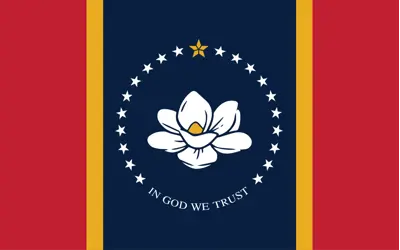
Mississippi (/ˌmɪsɪˈsɪpi/ (listen)) is a state in the Southeastern region of the United States, bordered to the north by Tennessee; to the east by Alabama; to the south by the Gulf of Mexico; to the southwest by Louisiana; and to the northwest by Arkansas. Mississippi's western boundary is largely defined by the Mississippi River. Mississippi is the 32nd largest and 34th-most populous of the 50 U.S. states. Jackson is both the state's capital and largest city. Greater Jackson is the state's most populous metropolitan area, with an estimated population of 580,166 in 2018.
